Virtual Fencing in Action: Producers Explore New Grazing Technology at WCROC
May 19, 2025 | Morris, Minnesota
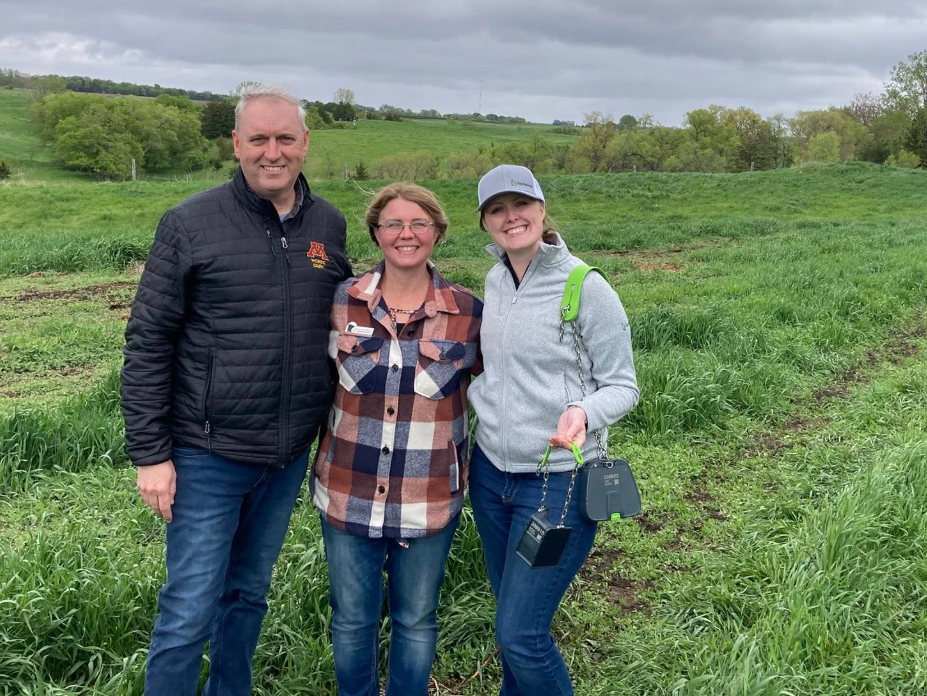
What does the future of grazing management look like? If this week's Virtual Fencing Field Day at the West Central Research and Outreach Center (WCROC) in Morris, Minnesota is any indication — it may include cattle wearing collars that play Norwegian lullabies.
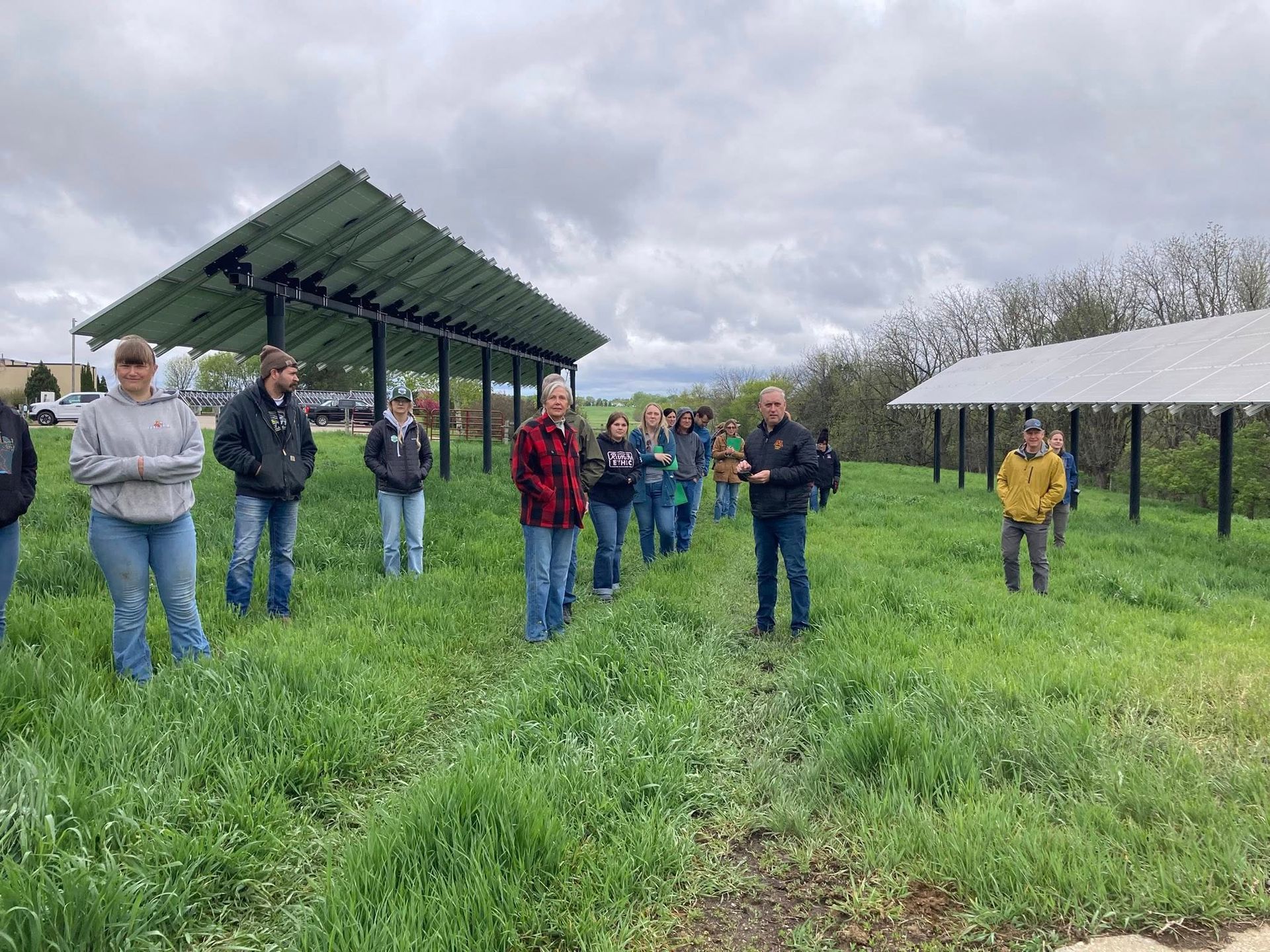
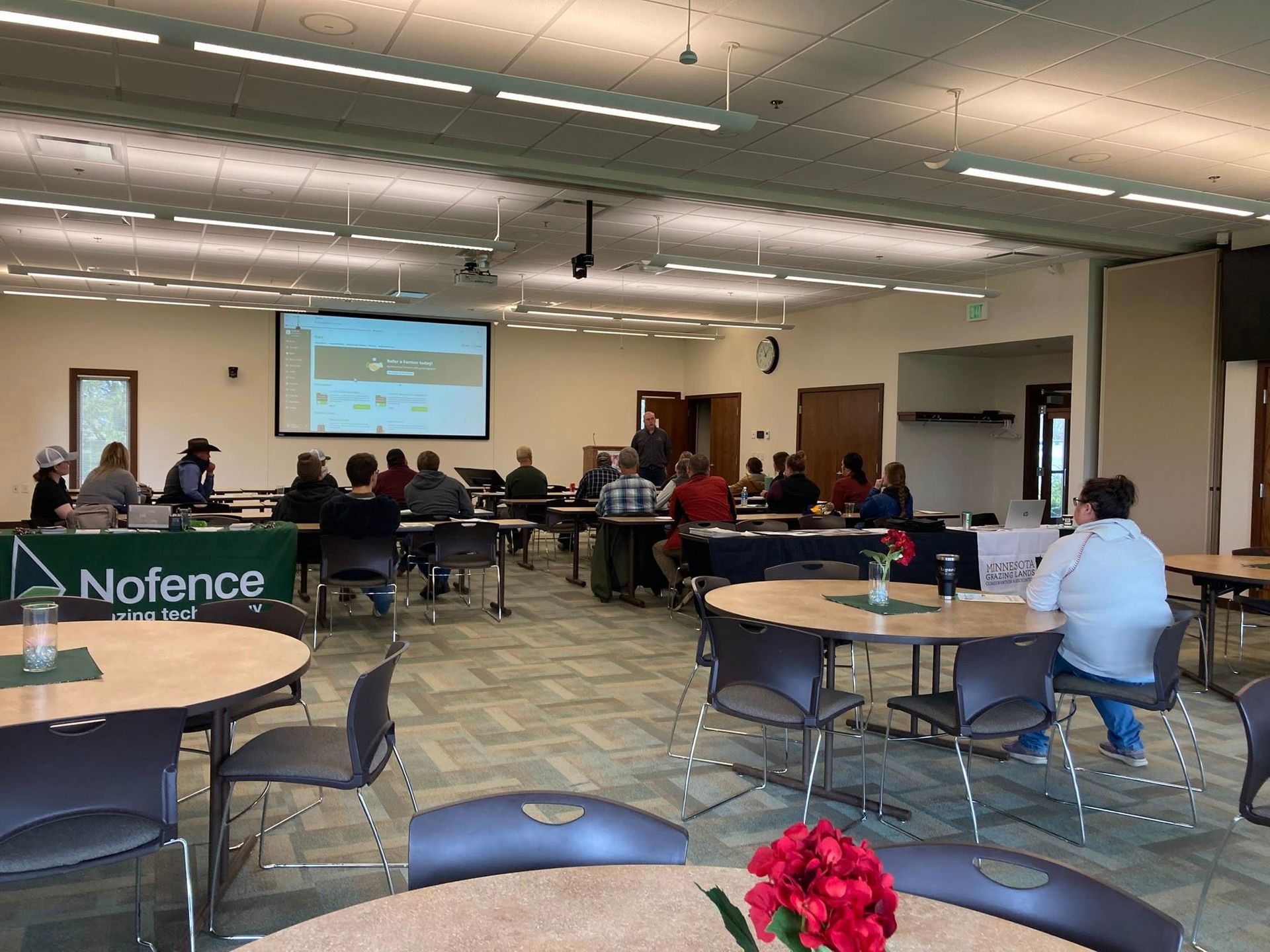
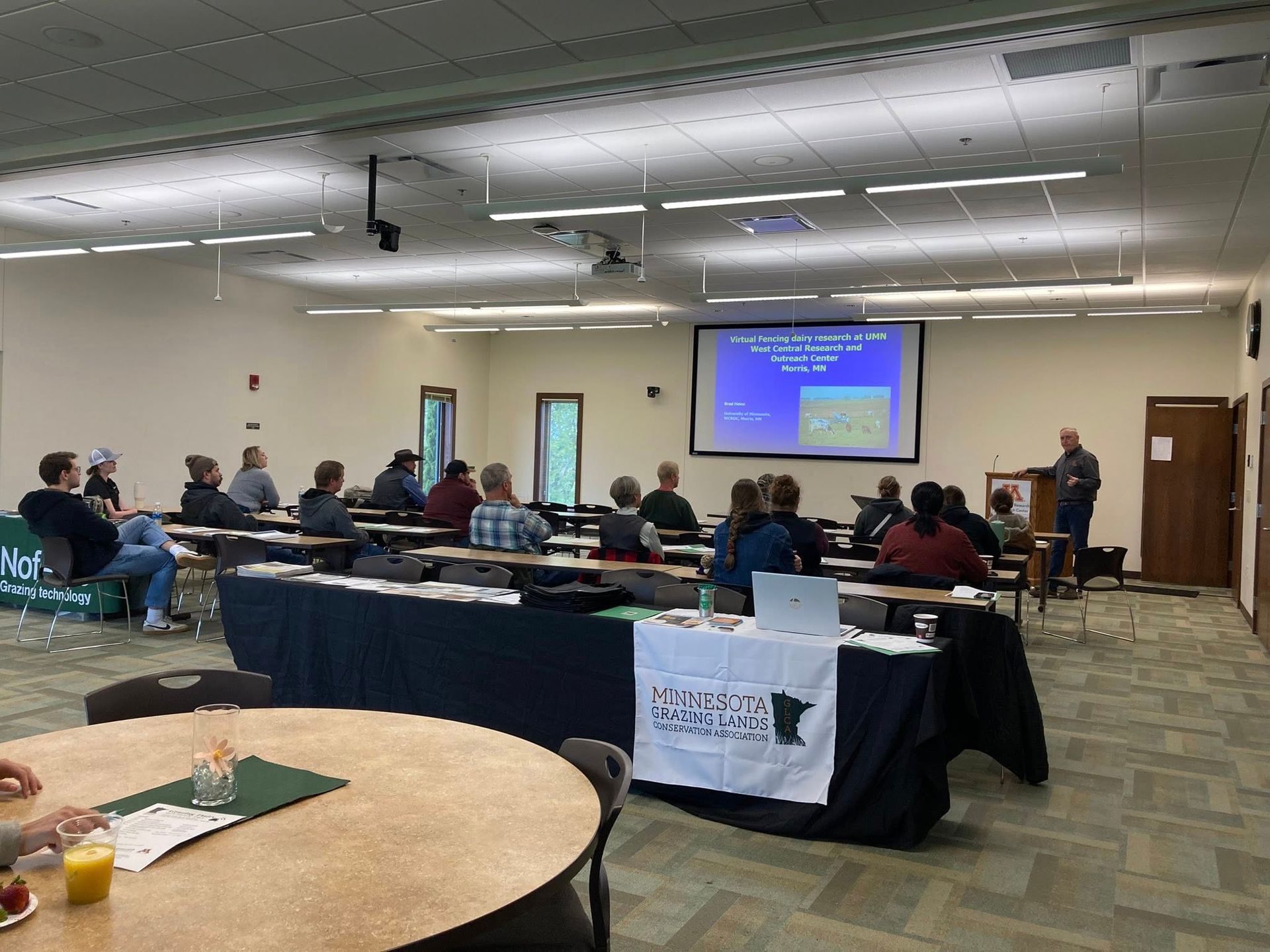
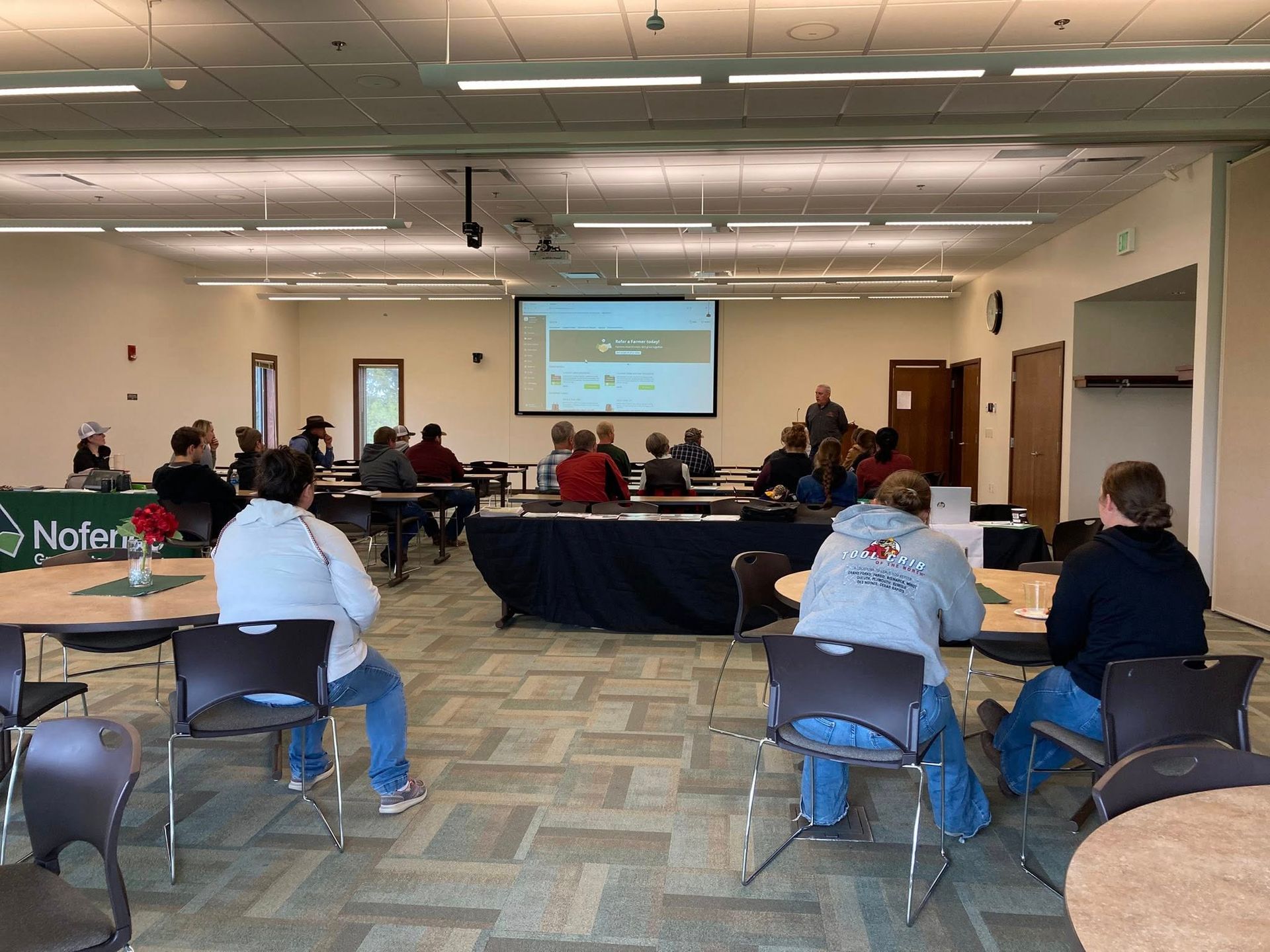
On Tuesday, May 19, tweny-six producers, conservation partners, and grazing advocates gathered at WCROC for a hands-on, three-hour deep dive into Nofence virtual fencing technology. The event was hosted through a collaboration between Nofence, the University of Minnesota Morris, and Green Lands Blue Waters along with the Natural Resources Conservation Service (NRCS) — a lineup that brought together research, conservation programming, technology, and producer outreach all under one roof (and eventually, on pasture too).
The Lineup
Four speakers anchored the program, each bringing a distinct lens to the topic of virtual fencing:
- Dr. Bradley Heins, University of Minnesota Morris — research and live technology demonstration
- Emma Baker, Nofence — product expertise and field Q&A
- Sabrina Florentino, MN Green Lands & Clean Waters Association — program overview and context
- Brady Blasher, NRCS / Pheasants Forever — conservation program integration
Cost-Share, Conservation, and Context
The morning kicked off with introductions from Leah Matzke (MNGLCA), followed by a brief overview of Nofence from representative Emma Baker. Next, Brady Blasher walked producers through current EQIP programming and emerging NRCS cost-share opportunities connected to virtual fencing systems. Sabrina Florentino spoke on behalf of event sponsor Green Lands Blue Waters, explaining the organization’s work advancing sustainable land and water management across Minnesota and highlighting virtual fencing as a livestock management tool to improve grazing efficiency while simultaneously supporting conservation goals.
Seeing It in Action
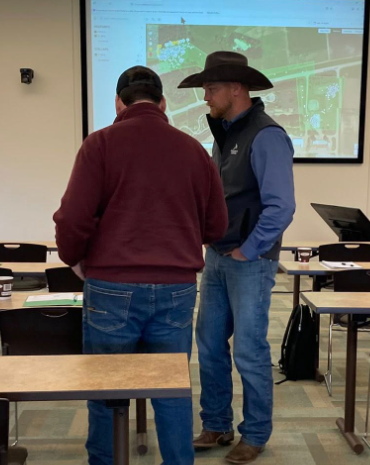
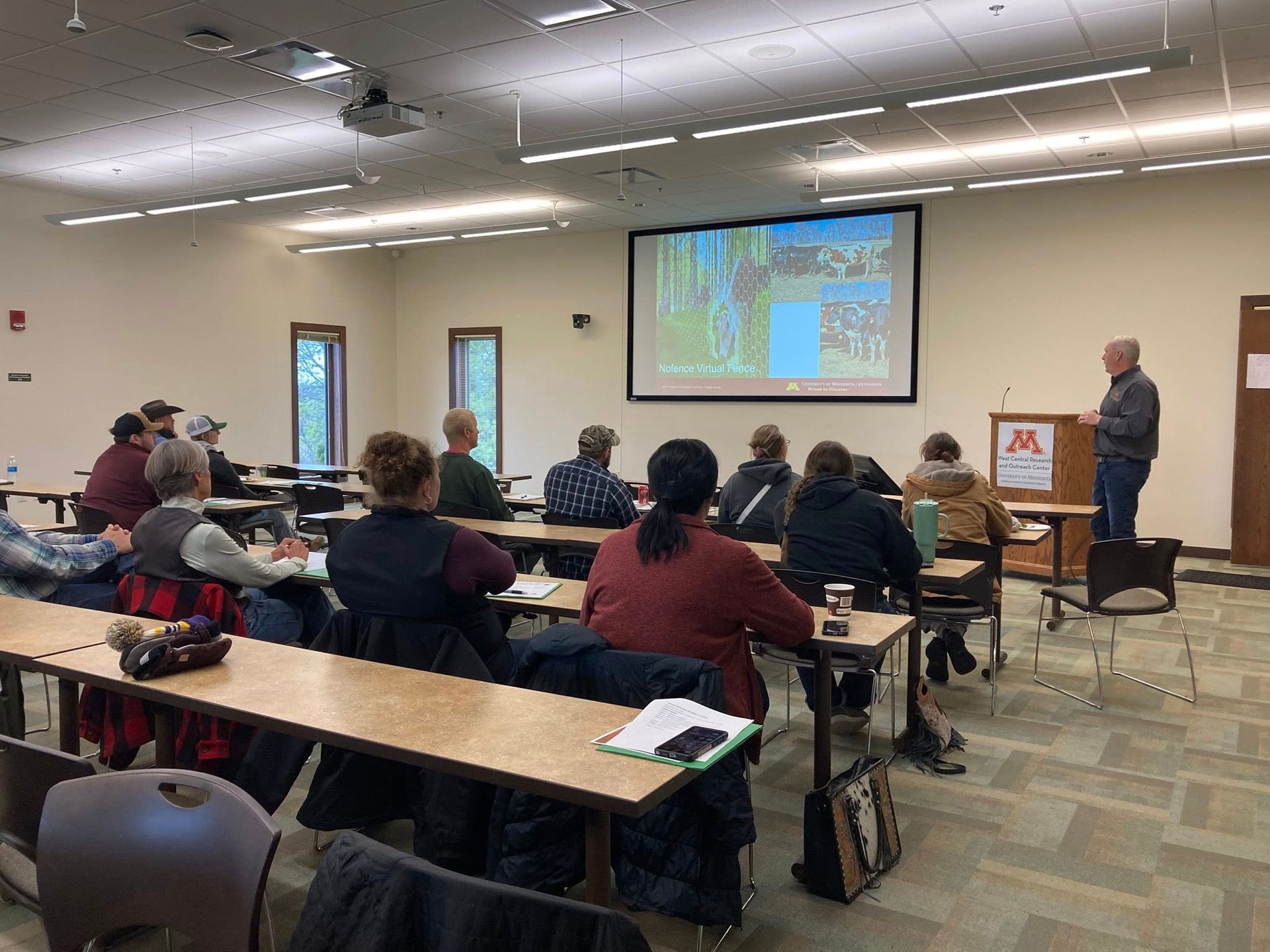
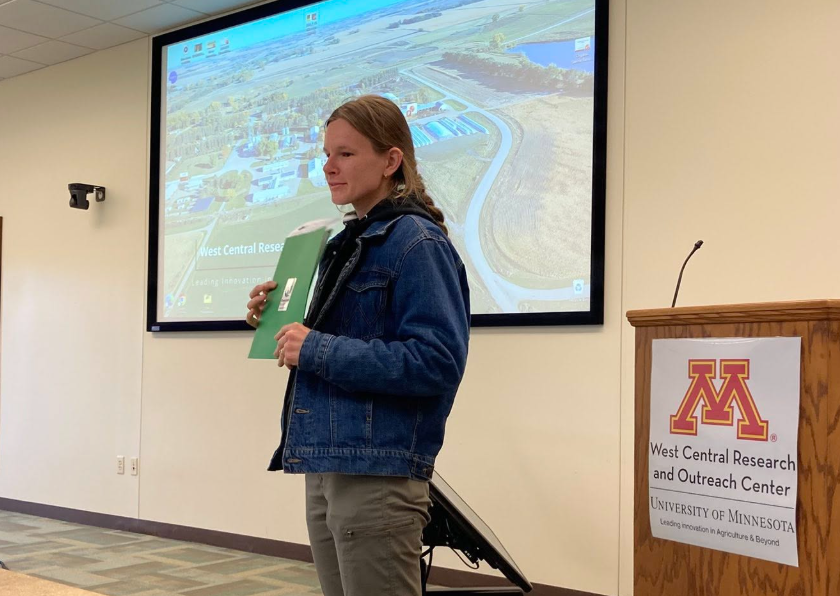
Dr. Heins pulled up the Nofence interface for a live demonstration. Attendees were shown how virtual boundaries can be drawn and adjusted, got a clear explanation of how cattle are trained to respond to audio cues and pulse corrections, and saw time-lapse data showing exactly how livestock move through virtual paddocks over time.
Producers wanted to know about collar functionality, training timelines, how flexible the system is for different pasture configurations, and what this actually looks like on a working farm day-to-day. Emma Baker answered technical questions with confidence and clarity, while Dr. Heins grounded the discussion with practical examples from ongoing research right there at WCROC.
Tom Shea of the National Grazing Lands Coalition (NatGLC) was also in attendance and added some welcome outside perspective, sharing positive observations from virtual fencing systems he has seen implemented on grazing operations elsewhere.
Dr. Heins was candid about the fact that not every application at a research station translates directly to every farm — but he stressed that the real power of virtual fencing is its flexibility. It bends to fit the operation, not the other way around. His most memorable example: he was at a Minnesota Twins game when his phone buzzed with an alert that cattle had moved outside the virtual boundary. He pulled it up on his phone, extended the grazing area remotely, and got back to the game.
Out to Pasture
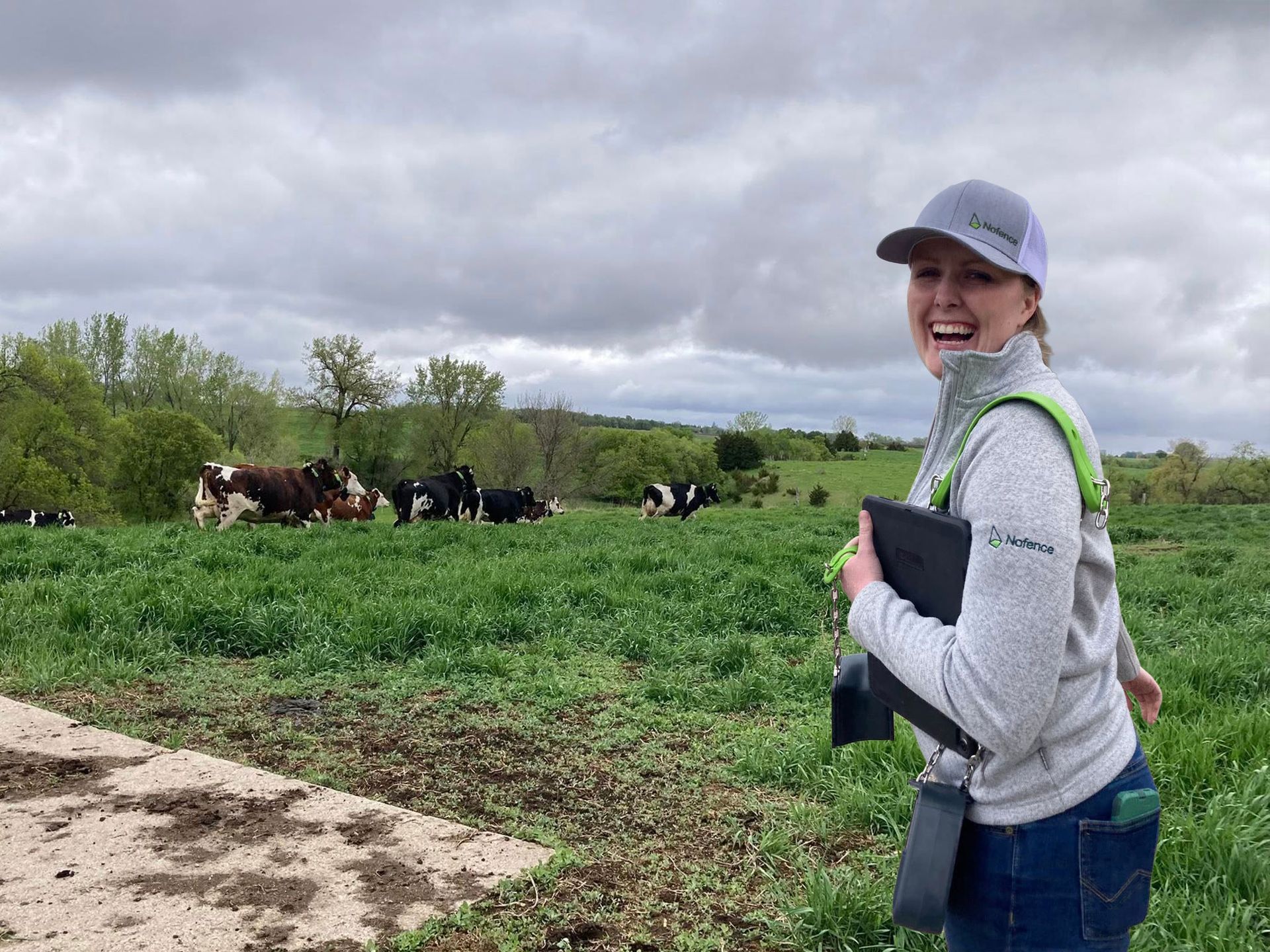
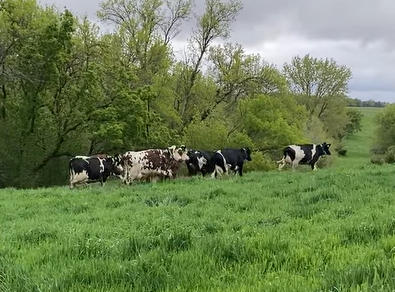
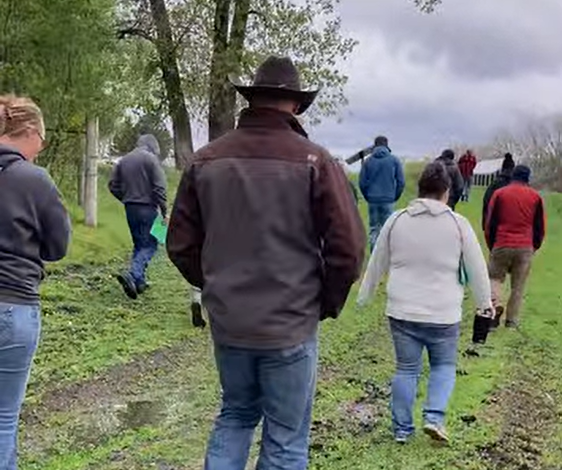
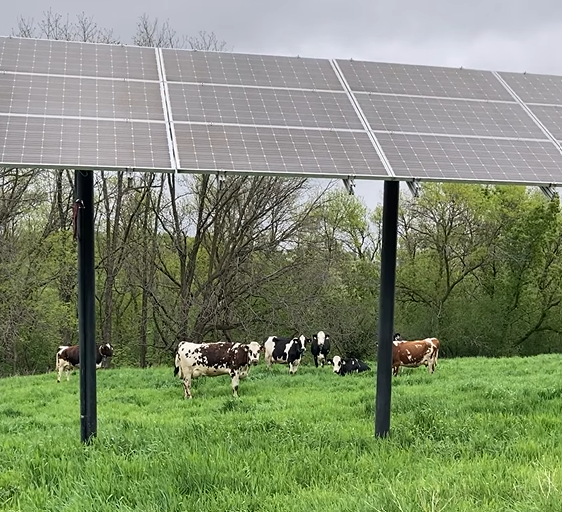
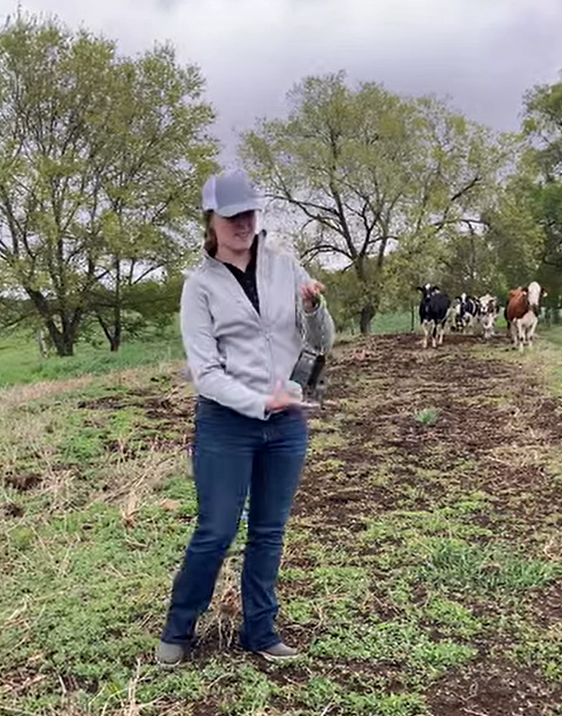
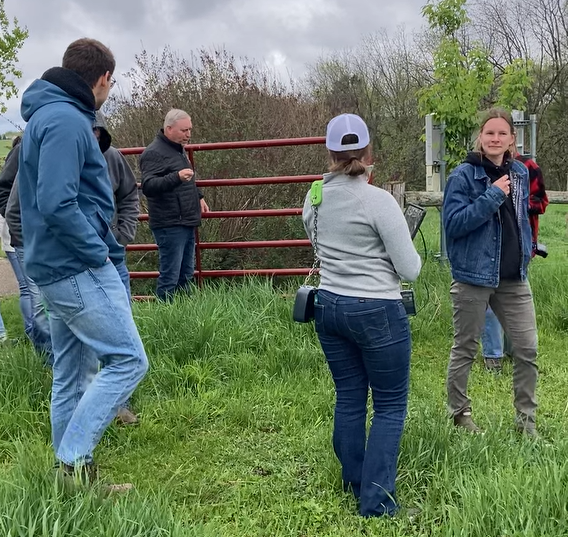
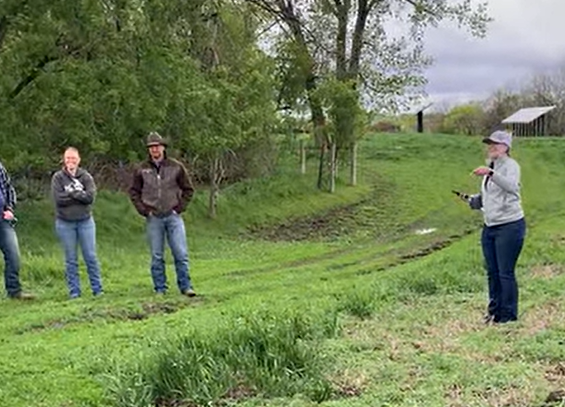
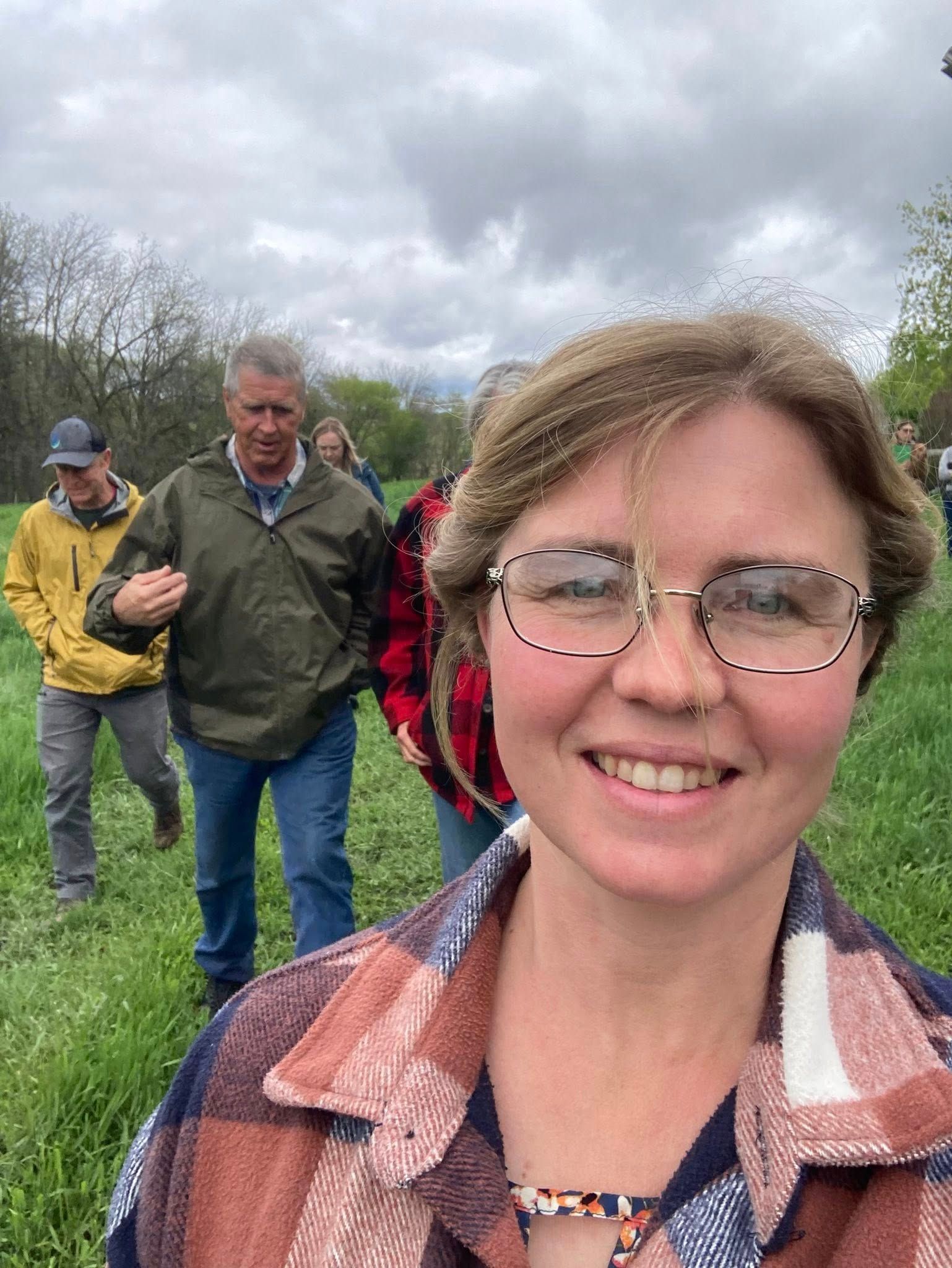
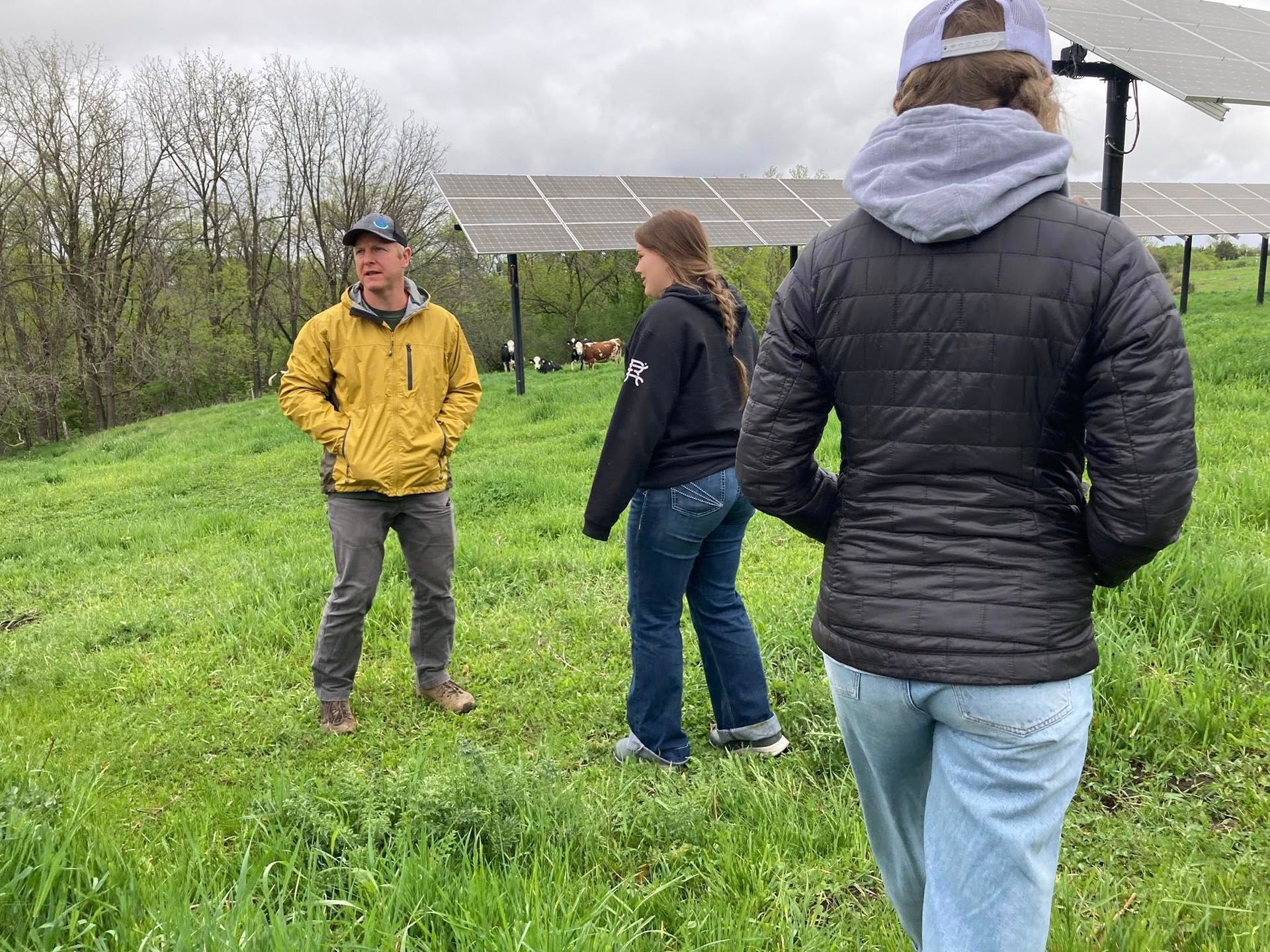
After the classroom session wrapped up, the group made their way out to the pasture alongside Dr. Heins to see the collars on actual cattle in the field. Emma Baker took the opportunity to walk producers through collar testing in a live setting — and ended by playing a bit of music for us. She explained that if a collar falls off an animal and needs to be located, it plays a Norwegian lullaby, its own built in "Find My Collar" feature.
Lunch, Networking, and Conversation
The event wrapped up with lunch and open networking — which might be one of the most underrated parts of any field day. Producers had time to compare notes, ask follow-up questions, and talk through what they'd seen with people who understand firsthand what it means to manage livestock on working land.
The Big Picture
Interest in adaptive grazing tools is growing, and events like this one give producers something that no brochure or website can replicate: the chance to see technology in action, ask specific questions directly to the researchers and reps behind it, and hear honest feedback from peers. The Virtual Fencing Dairy Field Day at WCROC delivered on all three fronts.
We're grateful to our partners — Nofence, University of Minnesota Morris, Green Lands Blue Waters, and our other wonderful supporters — for making it happen, and to every producer who showed up ready to engage. This is exactly the kind of work that moves the needle.
More events like this are on the horizon. Stay connected for updates.
Event organized in partnership with Nofence, University of Minnesota Morris, & Green Lands Blue Waters.
Recent Articles