Not Your Run-of-the-Mill Session:
A Cow’s-Eye View of Adaptive Grazing
2026 Extension Women in Agriculture Network Conference
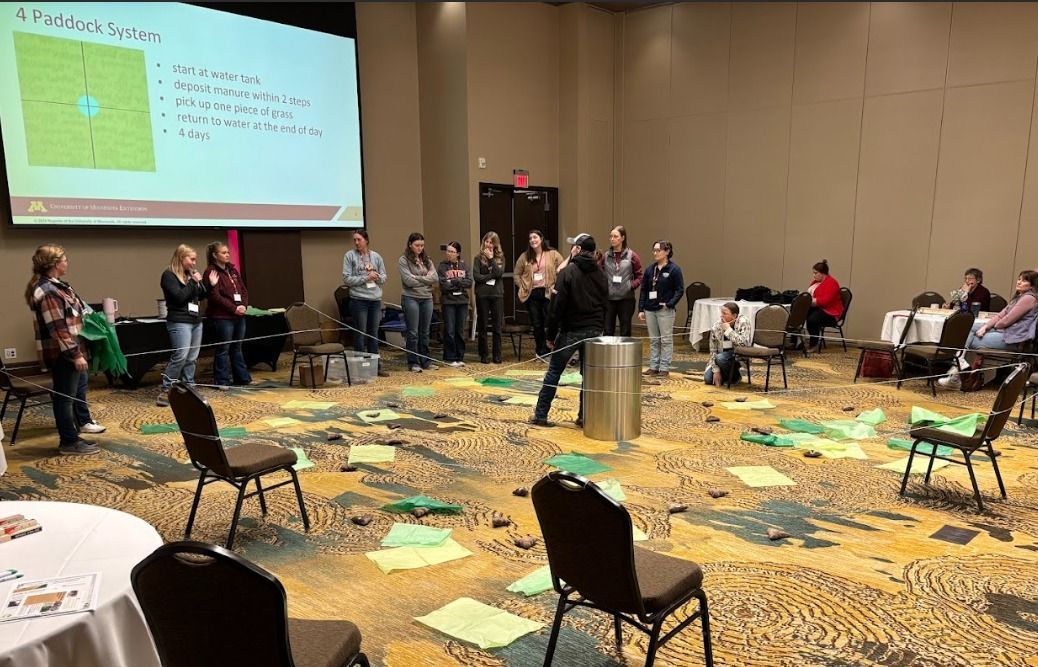
If you walked past the Yosemite Room during the 2026 Extension Women in Agriculture Network Conference, you may have heard laughter — and possibly someone announcing, “Guess what? Today you all get to be cows!”
This was not your typical lecture.
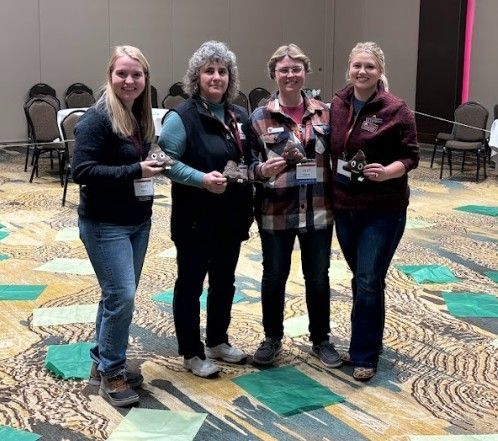
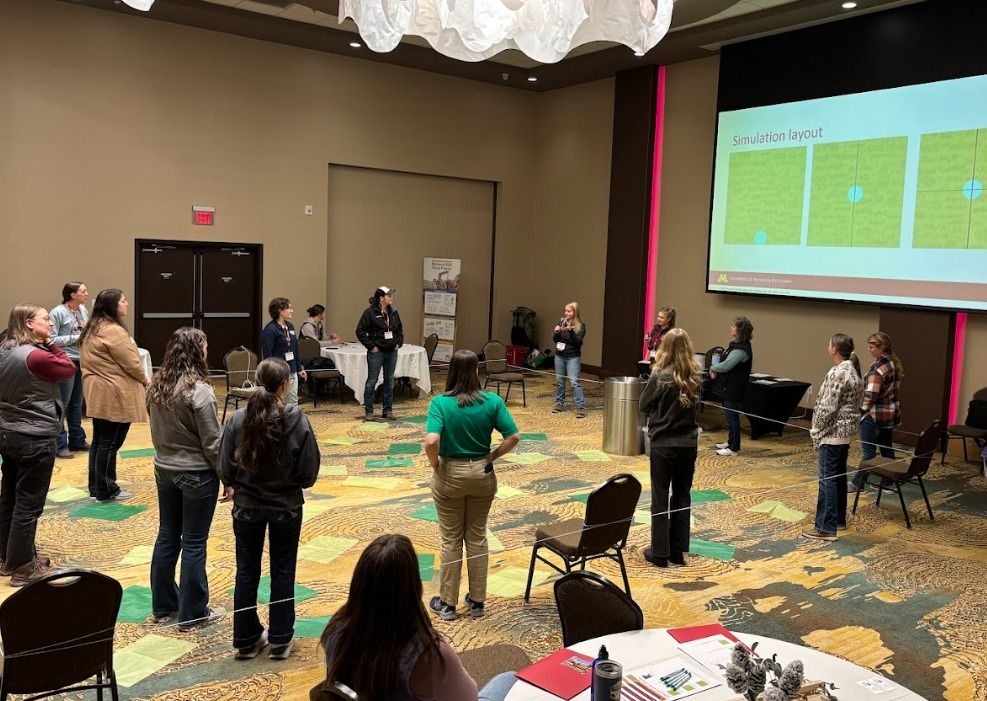
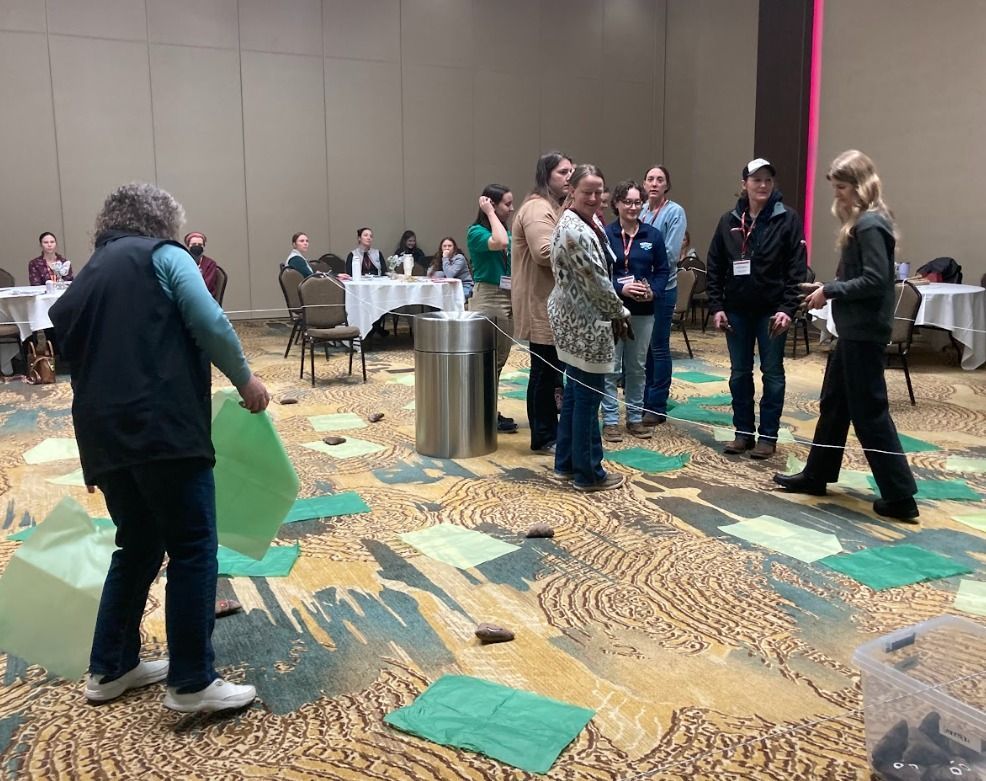
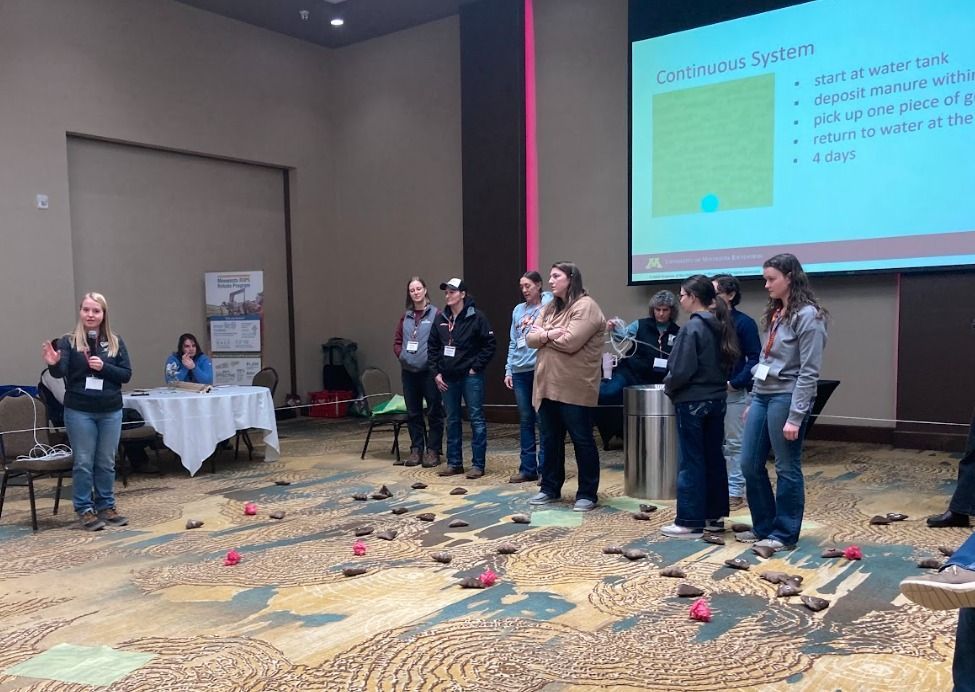
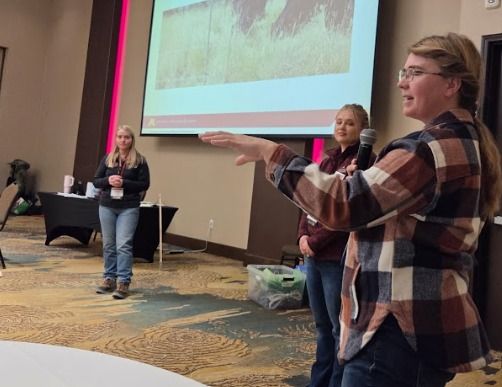
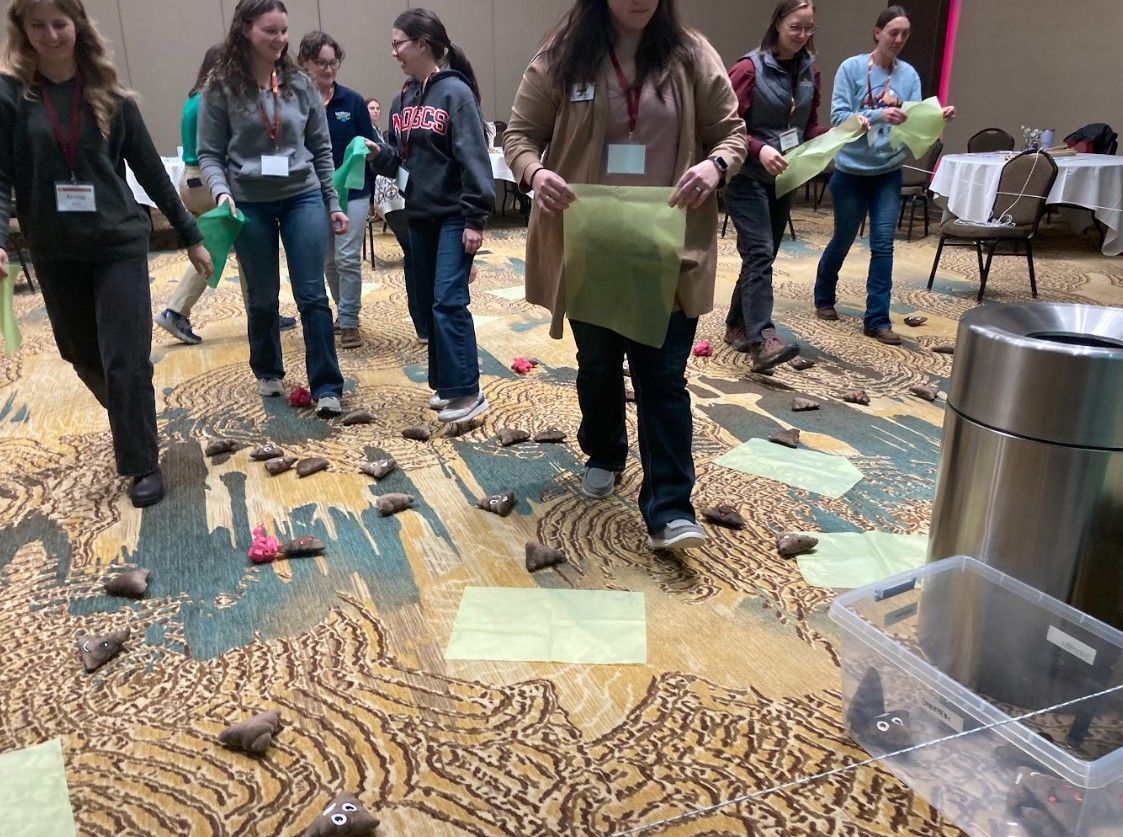
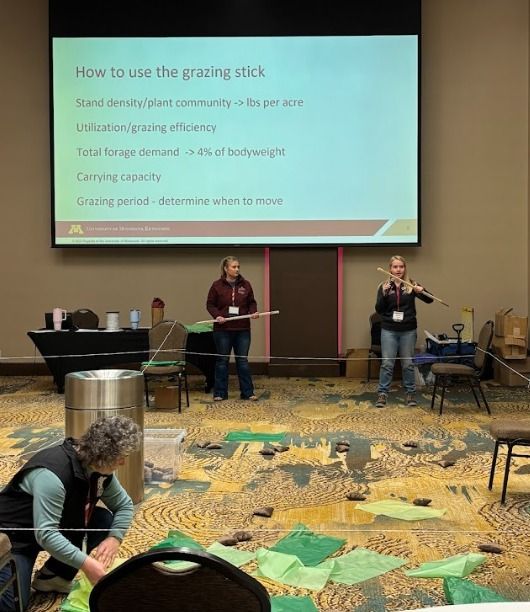
Led by Tarah Young, Star Nelson, Mercedes Moffett, Leah Matzke and Deb Thooft, the Adaptive Grazing Simulation invited participants to experience pasture management from a cow’s-eye view. Using life-sized props and hands-on movement, attendees compared continuous grazing and rotational grazing systems in real time.
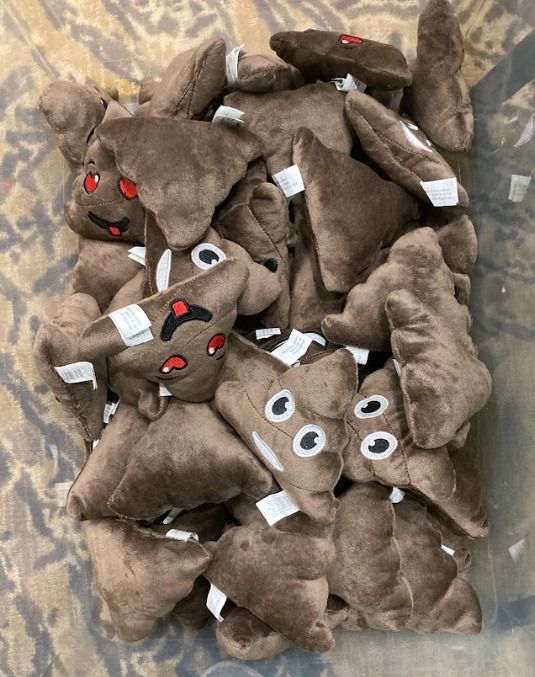
And yes — there were “manure” emojis involved.
Learning by Doing (and Laughing)
The session opened with Mercedes cheerfully assigning the room its new role: cows. From there, participants moved through a simulated pasture system, visually experiencing how different grazing approaches affect forage growth, regrowth time, and pasture health.
At one memorable moment, Tarah accidentally stepped into a bucket of manure emojis — earning a round of laughter. The humor set the tone: approachable, engaging, and refreshingly practical. But underneath the fun was a serious lesson.
Continuous vs. Rotational Grazing — What Changes?
Through the simulation, participants saw how continuous grazing can lead to uneven forage use, overgrazed areas, and stressed plants struggling to recover. After running the simulation Mercedes commented "If I were a cow, I would not be very happy with this."
Then the system shifted.
By dividing pastures into smaller paddocks and rotating animals strategically, the group could see — physically and visually — how:
- Forage regrowth improves
- Soil remains better covered
- Hay feeding needs decrease
- Overall resilience increases
One of the most impactful takeaways was how much hay cost can potentially be reduced simply by improving grazing management. Seeing it play out spatially made the concept tangible.
Tools for Real-World Application
The learning didn’t stop at simulation.
Participants worked through a forage calculation worksheet and learned how to use a grazing stick to estimate available forage and plan stocking density. These practical tools bridged the gap between concept and implementation.
Instead of leaving with inspiration alone, attendees left with numbers, strategy, and confidence.
Connection and Community
The Women in Agriculture Network Conference proved to be a meaningful space for conversation. Questions flowed easily. Experiences were shared openly. The energy in the room reflected something bigger than technique — it reflected curiosity and commitment.
For MNGLCA, the event was an important opportunity to connect women in agriculture with grazing resources, field days, and a supportive community focused on soil health and adaptive management.
We are grateful to UMN Extension for hosting such a thoughtful and engaging conference — and to everyone who stepped into the pasture simulation with us.
Because sometimes the best way to understand grazing…is to see it from the cow’s perspective.
Recent Articles