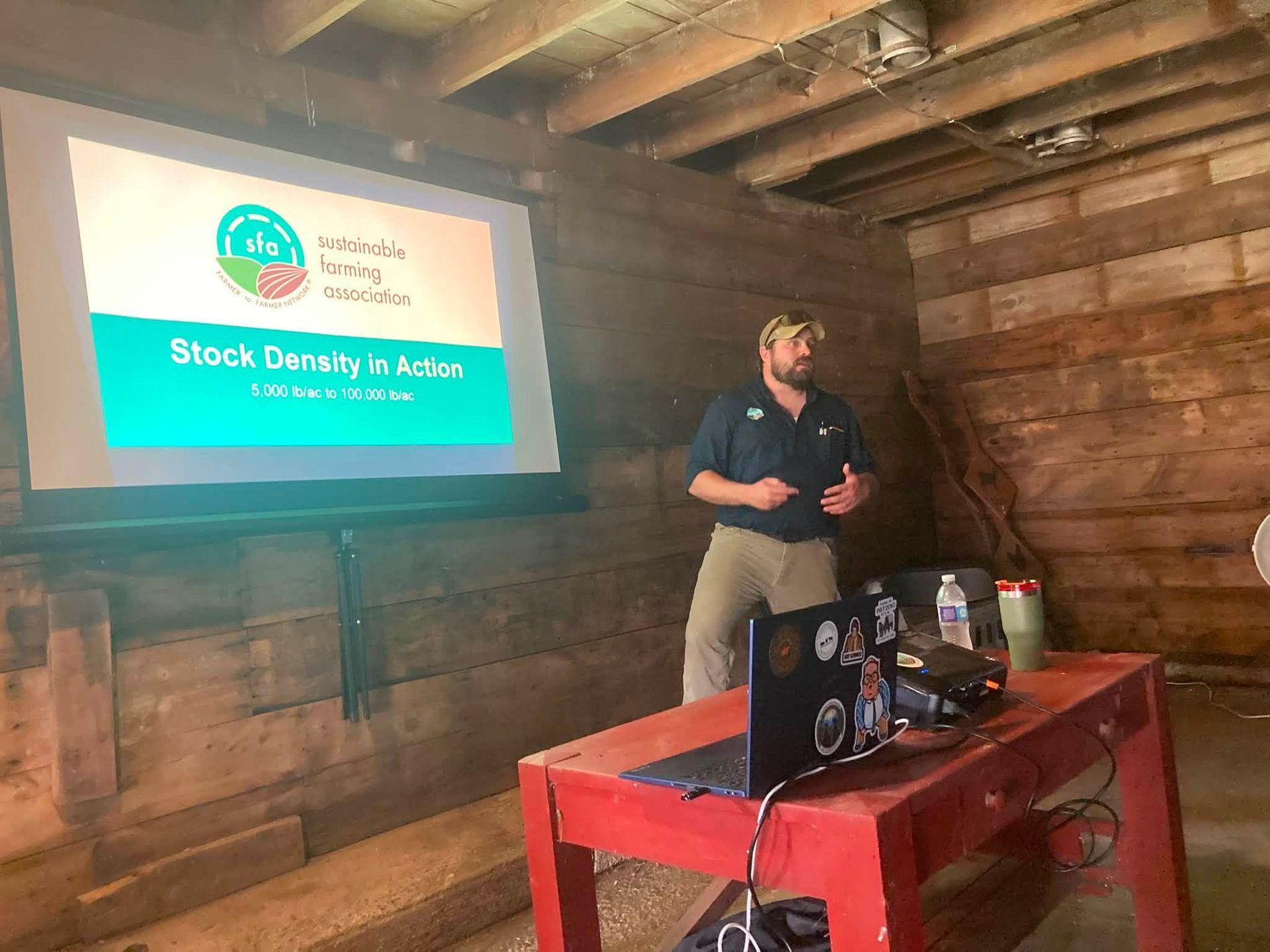
Stock Density in Action
Learning to See What the Pasture Is Telling Us
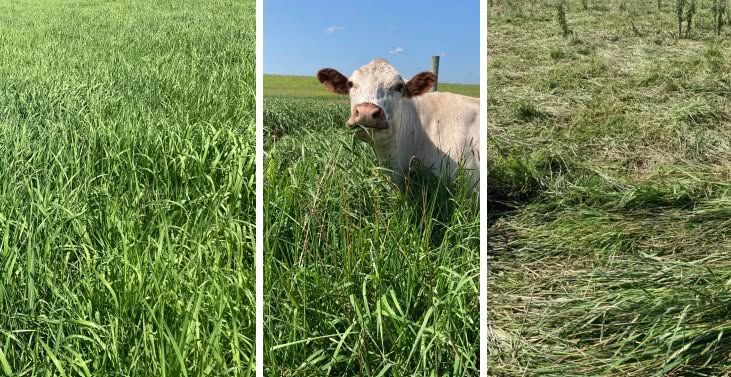
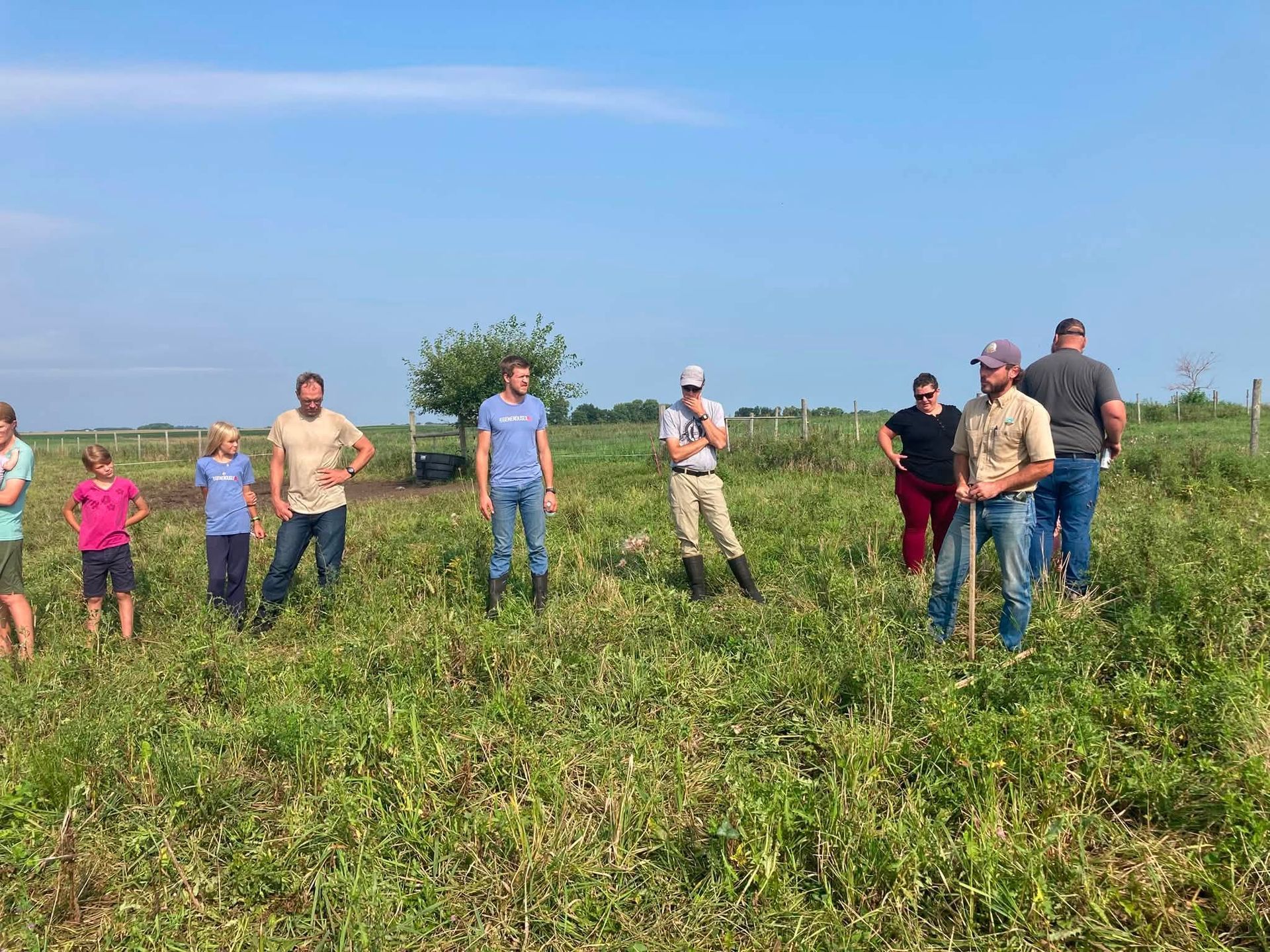
On August 11, Great Heritage Farm in Winthrop, Minnesota, welcomed producers for “Stock Density Management in Action: From 5,000-lbs/ac to 100,000-lbs/ac,” a hands-on grazing education event put on by the Sustainable Farming Association (SFA).
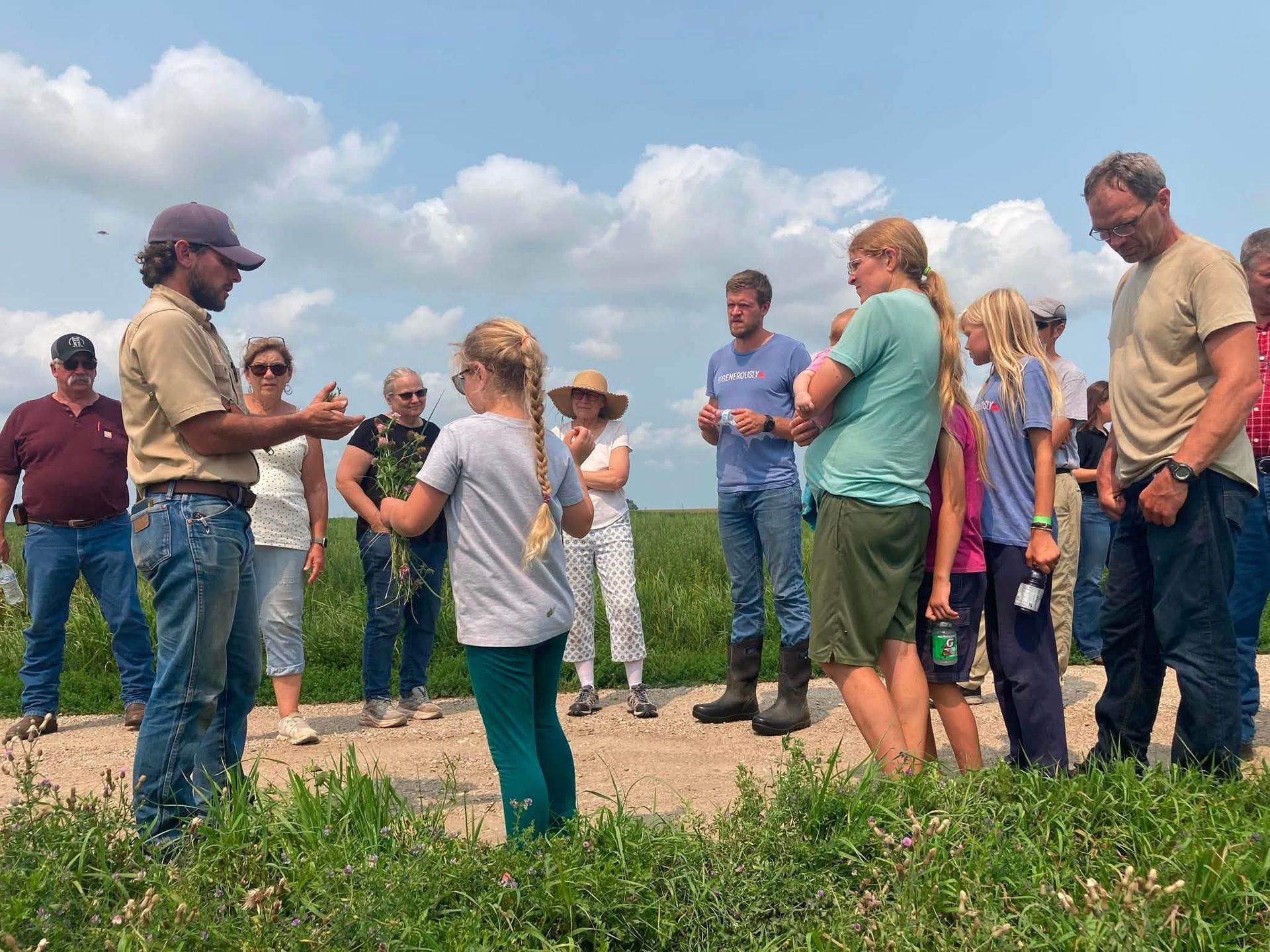
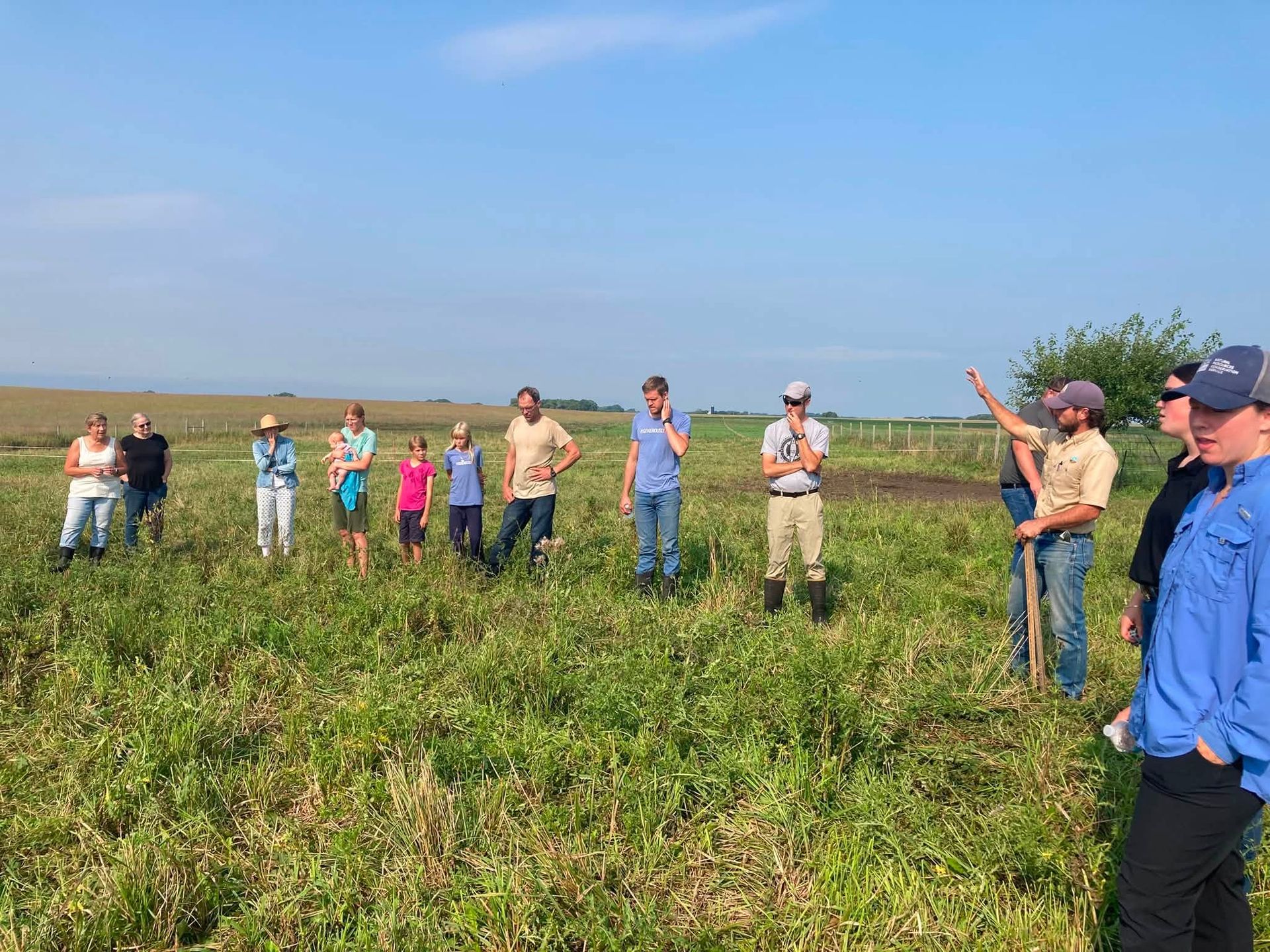
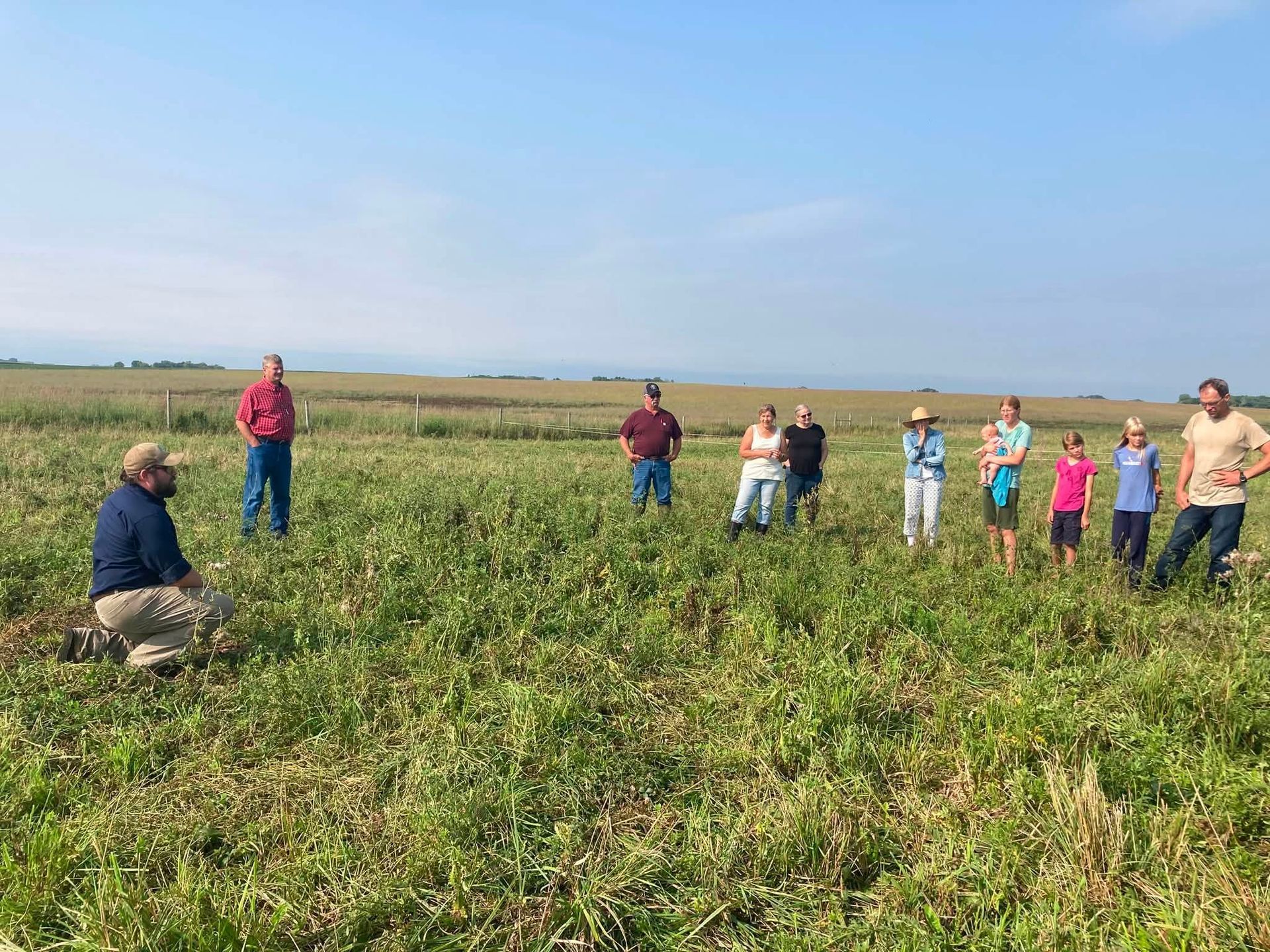
The day brought together farmers and educators for something that can be difficult to capture in a classroom: the opportunity to see, in real time, how changing stock density, time, and space affects livestock, plants, soil, and pasture management.
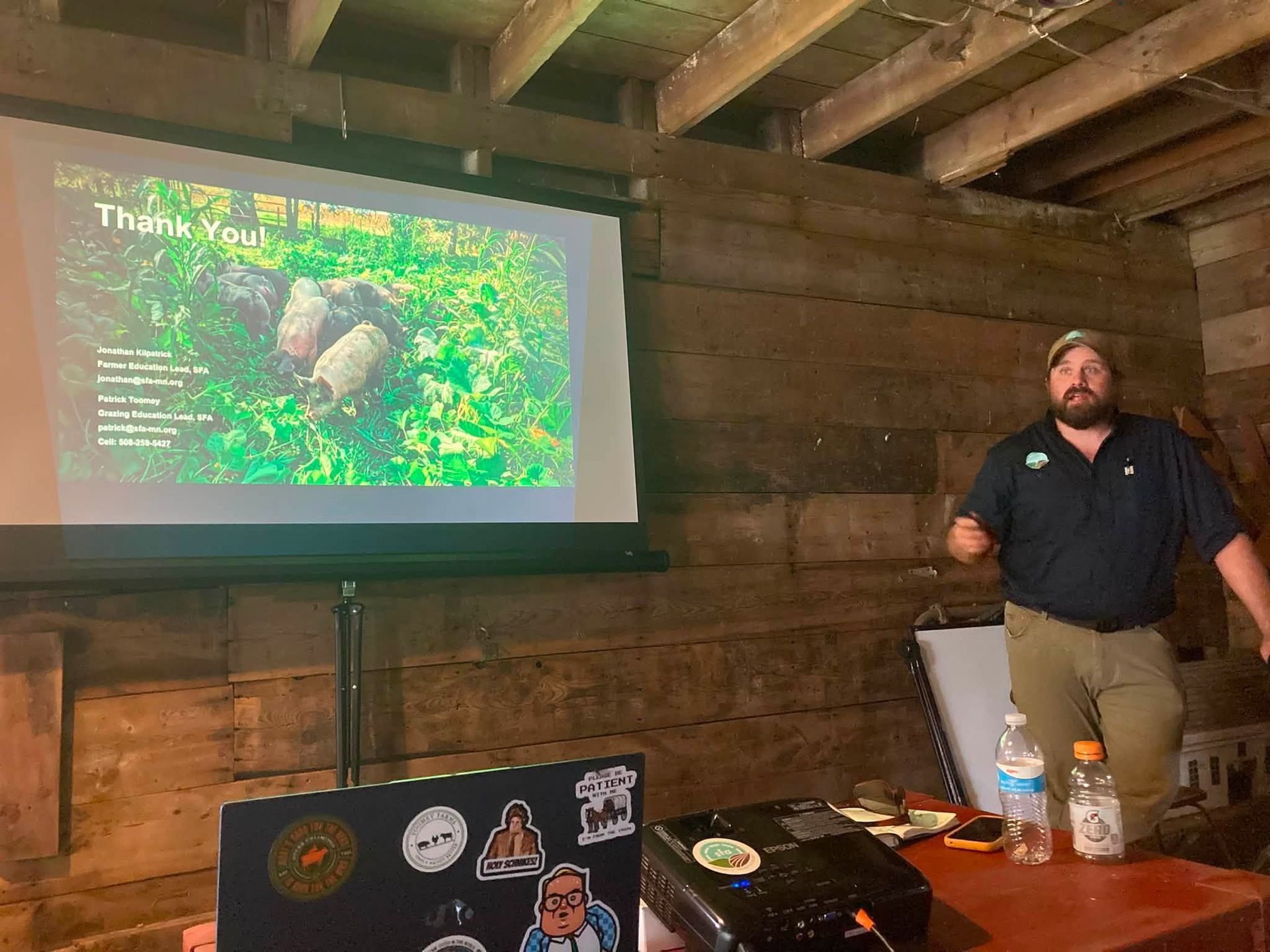
We began with greetings in the barnyard before the group gathered for a cozy classroom session in the barn. SFA Grazing Education Lead, Patrick Toomey, has a knack for combining storytelling, visuals, and practical examples to keep participants engaged. He and SFA Farmer Education Director Jonathan Kilpatrick began by introducing the concept of stock density—thinking about grazing in terms of pounds of livestock per acre—and exploring what happens when that density increases dramatically.
But rather than simply talk about it, the group headed into the pasture to see it for themselves.
Start With a Good Question: “What Do You Notice?”
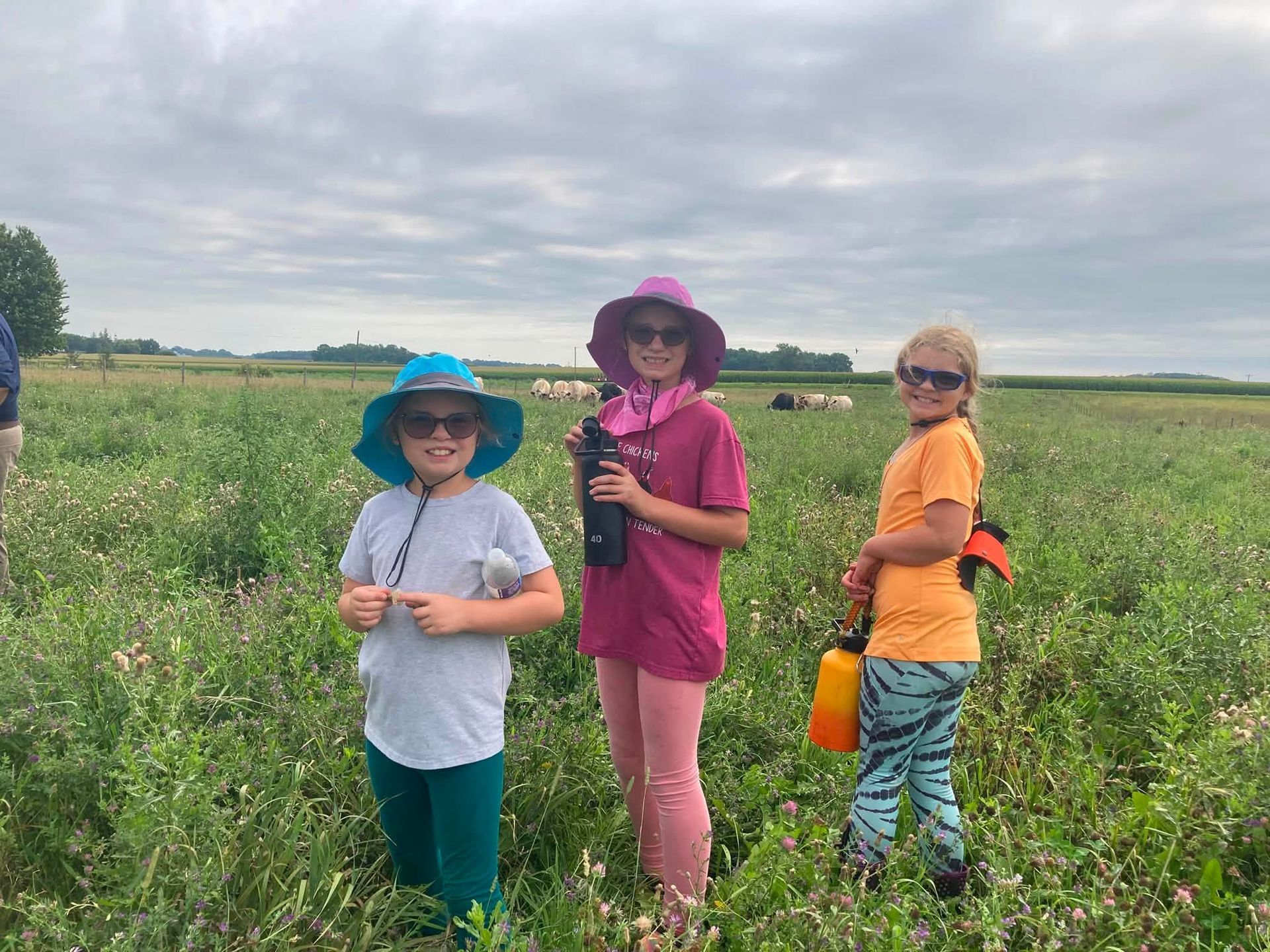
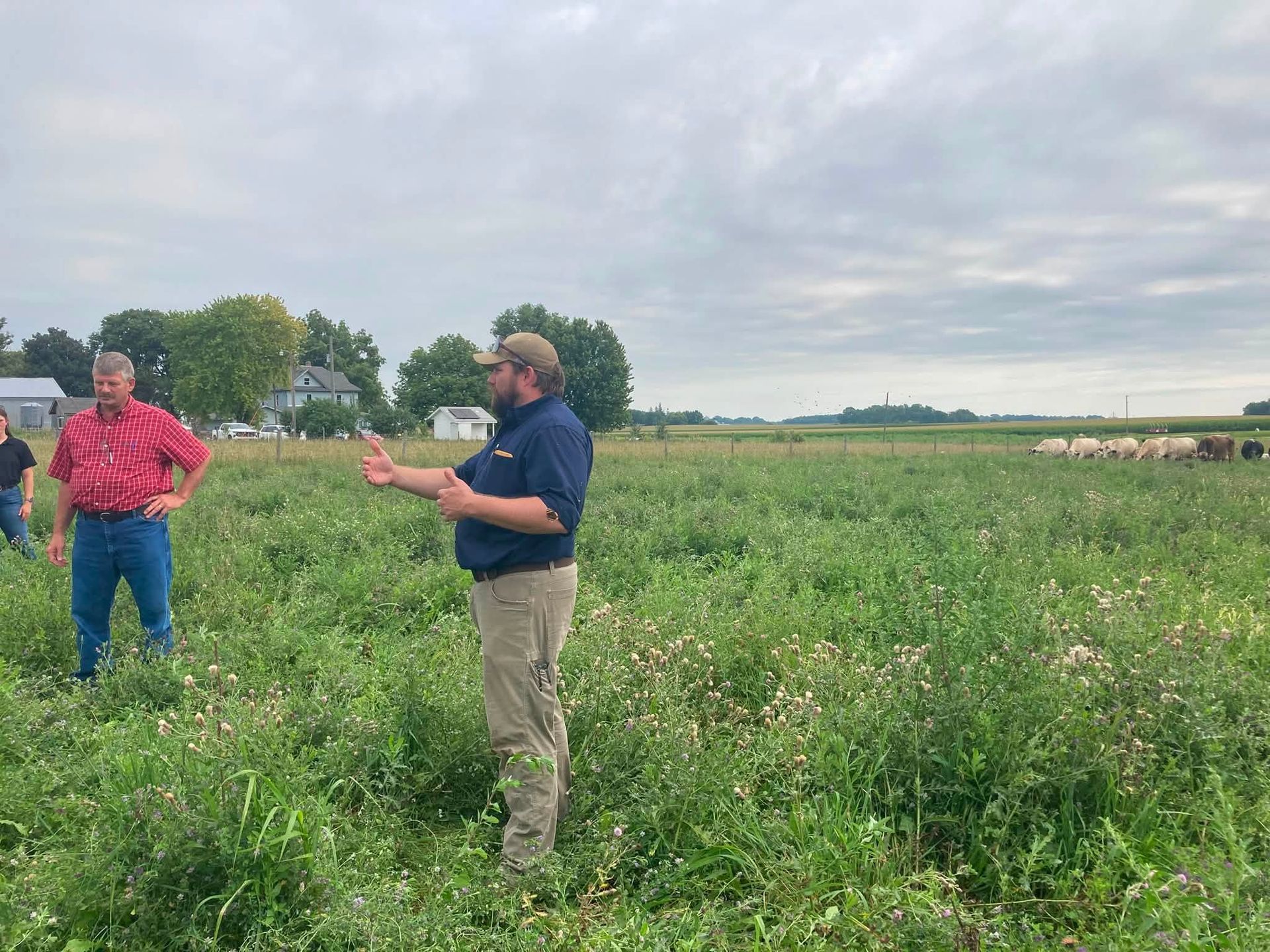
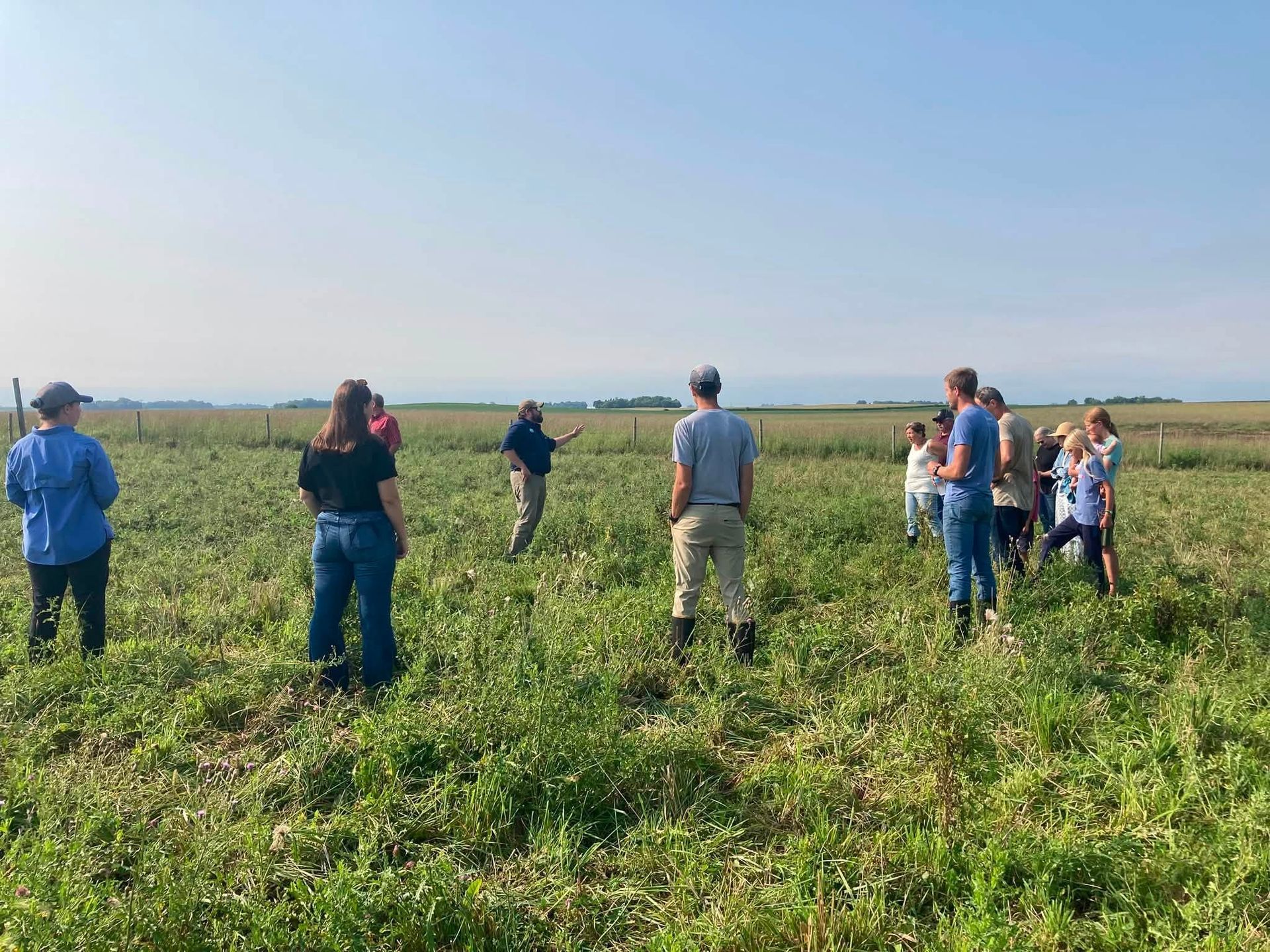
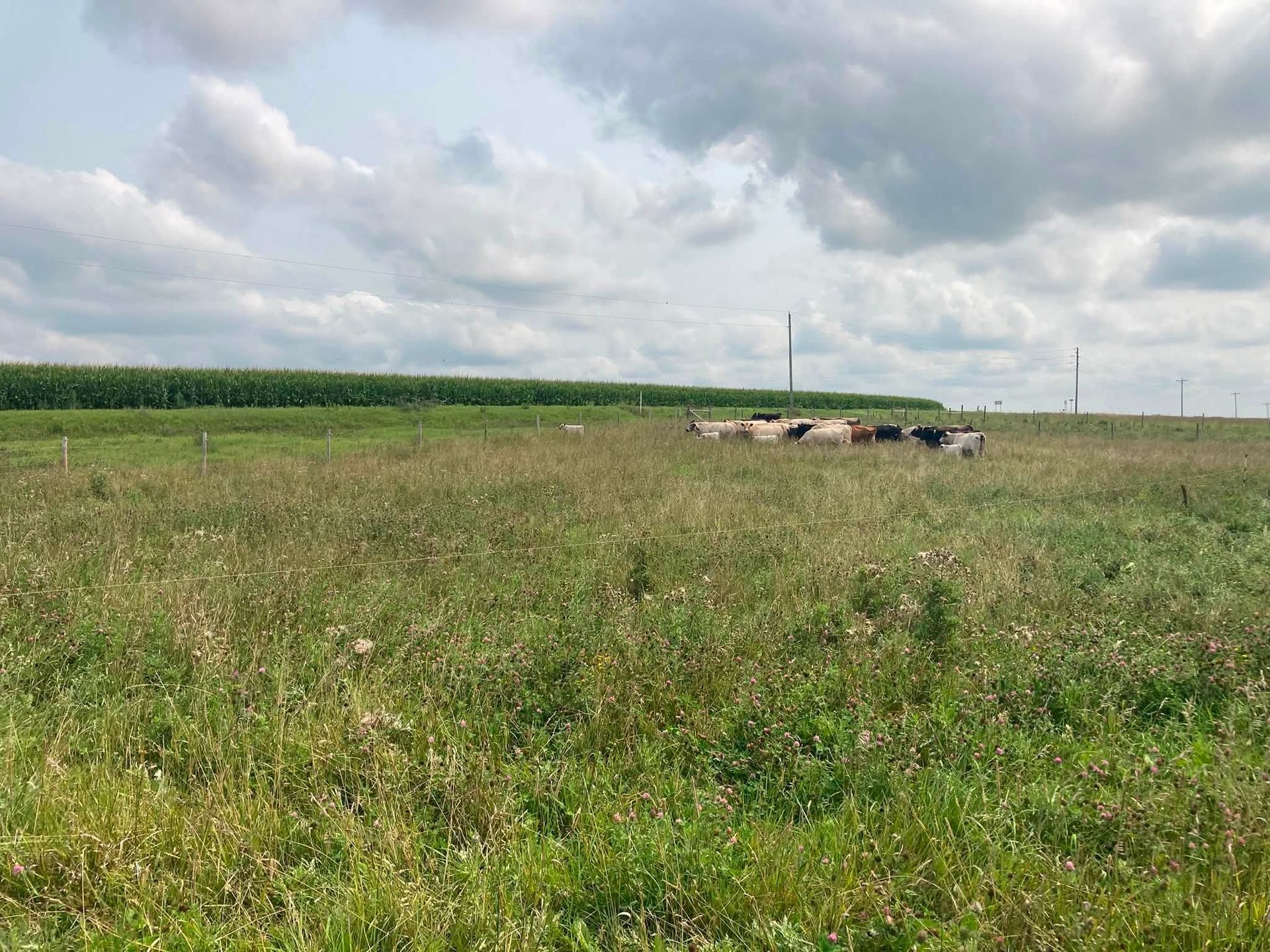
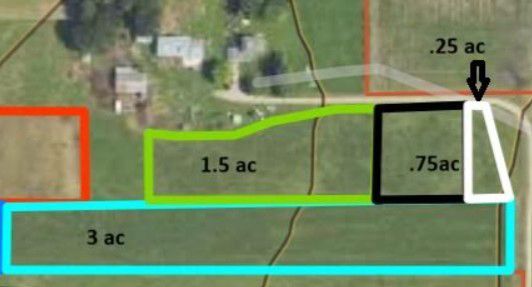
The first stop was a three-acre pasture with cattle grazing. Before offering conclusions, Patrick posed a simple question to the producers: What do you notice? That question became a theme for the day.
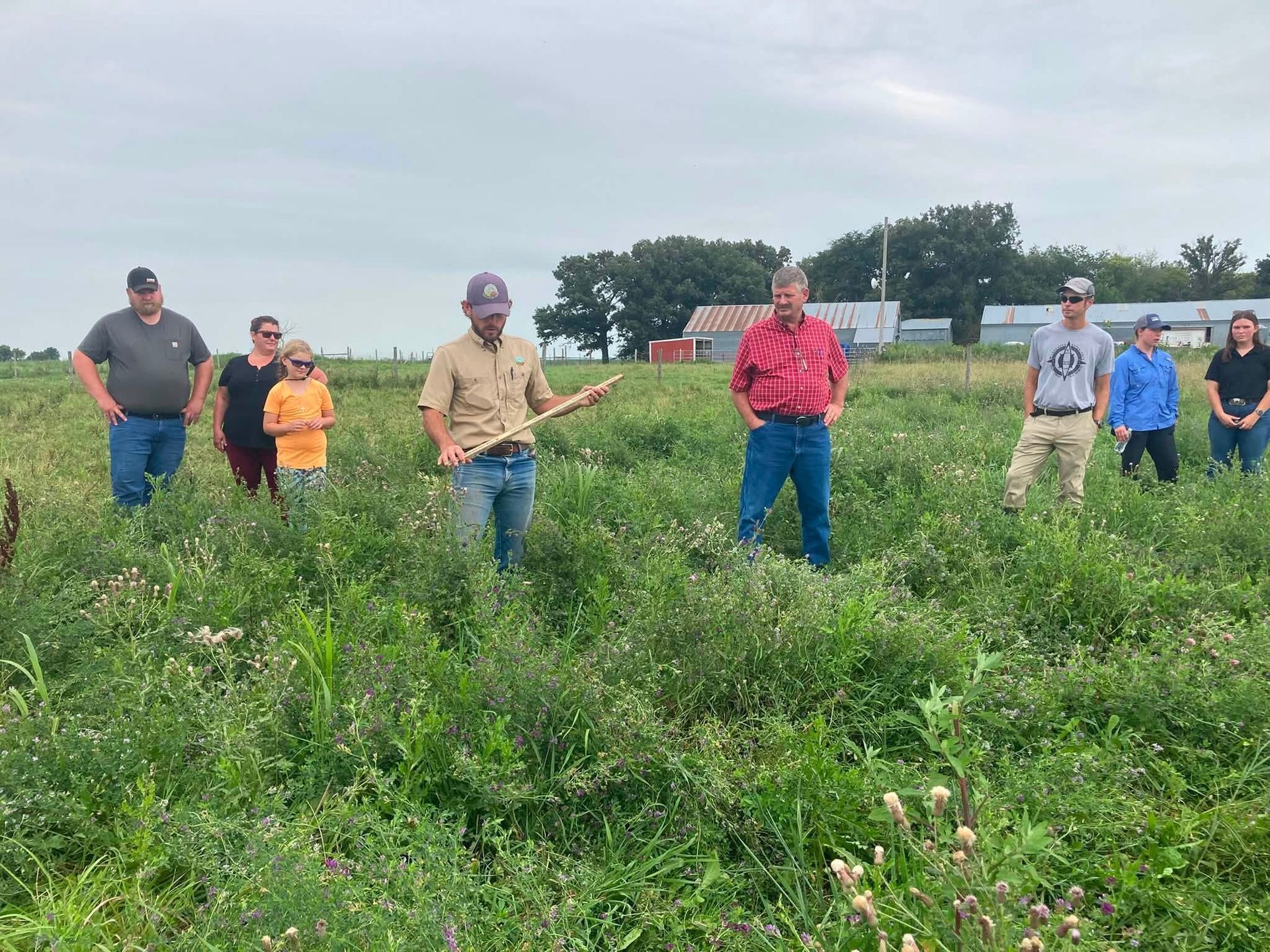
Participants observed forage height, weed pressure, the condition of the pasture, and how long the ground had been in pasture. Jonathan emphasized the importance of asking good questions before jumping to conclusions. What are we actually seeing? What might have caused it? What information do we still need?
The group also estimated available forage using a grazing stick, connecting what they could see in the field with practical grazing calculations.
Then the cattle were moved.
Changing the Space Changes the Conversation
The herd was moved from the three-acre area into a 1.5-acre pasture. Once again, participants were asked to observe.
How much space did the cattle actually have? How were they behaving? Did they seem stressed? What was happening to the plants? Patrick used these observations to help participants think about the relationship between time and space in a grazing system.
The lesson wasn't whether higher stock density is better or worse. Instead, it was about understanding how the amount of space available to livestock, combined with the amount of time they spend there, changes the way animals interact with the pasture.
That same principle continued throughout the day as the cattle were observed in progressively smaller areas.
From Overgrazing to “Gardening” the Pasture
One of the goals of stock density management is not simply to put more animals on an acre. It is to intentionally manage how livestock interact with plants and soil.
The group discussed how stock density and time on pasture can influence outcomes, including what it means to be overgrazing—even in otherwise well-managed grazing systems. The challenge is learning how to recognize what is happening in front of us and then adjust accordingly.
Later in the day, the cattle were observed in 0.75-acre and 0.25-acre areas. As the available space became tighter, participants could see changes in herd behavior. The cattle became more competitive for available forage, providing another tangible example of how space influences livestock behavior and grazing patterns.
The exercise brought the idea of “gardening” pastures to life: using livestock intentionally to influence plant communities, soil, and long-term pasture productivity.
Lunch, Conversation, and Farmer-to-Farmer Learning
After a morning of observing and discussing grazing management, everyone gathered for lunch. As is often the case at grazing events, some of the most valuable learning happened around the table. These gatherings give farmers a chance to talk with one another, compare experiences, ask questions, and build relationships. The formal presentations may provide the framework, but the conversations between producers are an important part of the learning process.
Looking at the Soil Beneath the Pasture
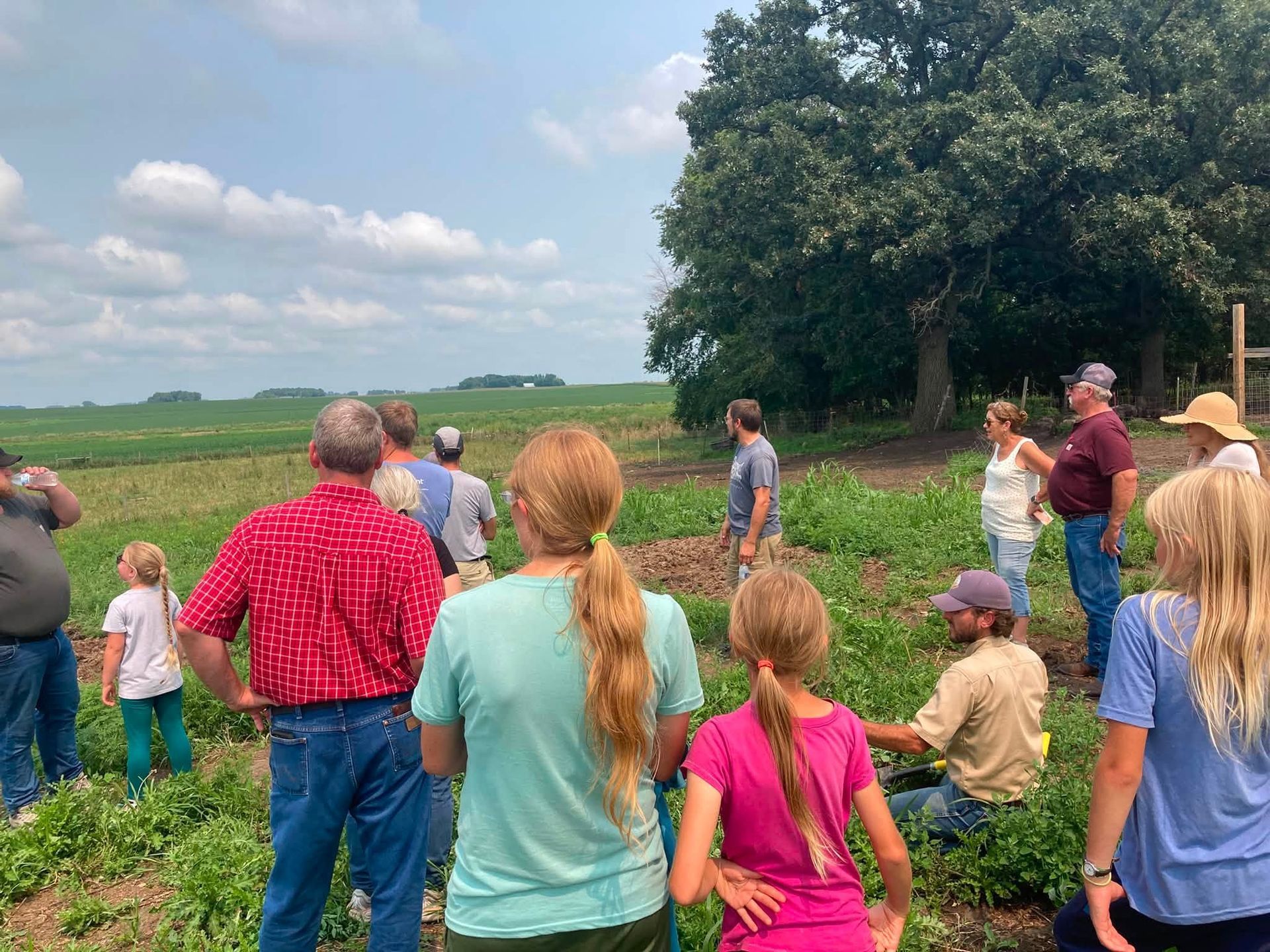
After lunch, the group visited the hillside where bale grazing had been taking place. The discussion shifted to the soil beneath the grazing system. Participants observed differences in soil type, weed pressure, and the amount of carbon and organic material being left behind.
Even a spider became part of the conversation. When a daddy-long-leg was spotted on Jonathan's collar, he jokingly responded, “What is a spider?” When the group identified it as a predator, Jonathan pointed out an important principle: predators are part of a healthy ecosystem and are good to see in the pasture. It was a small moment, but a fitting reminder that pasture health isn't only about the livestock and forage. A healthy grazing ecosystem includes a whole community of organisms interacting with one another.
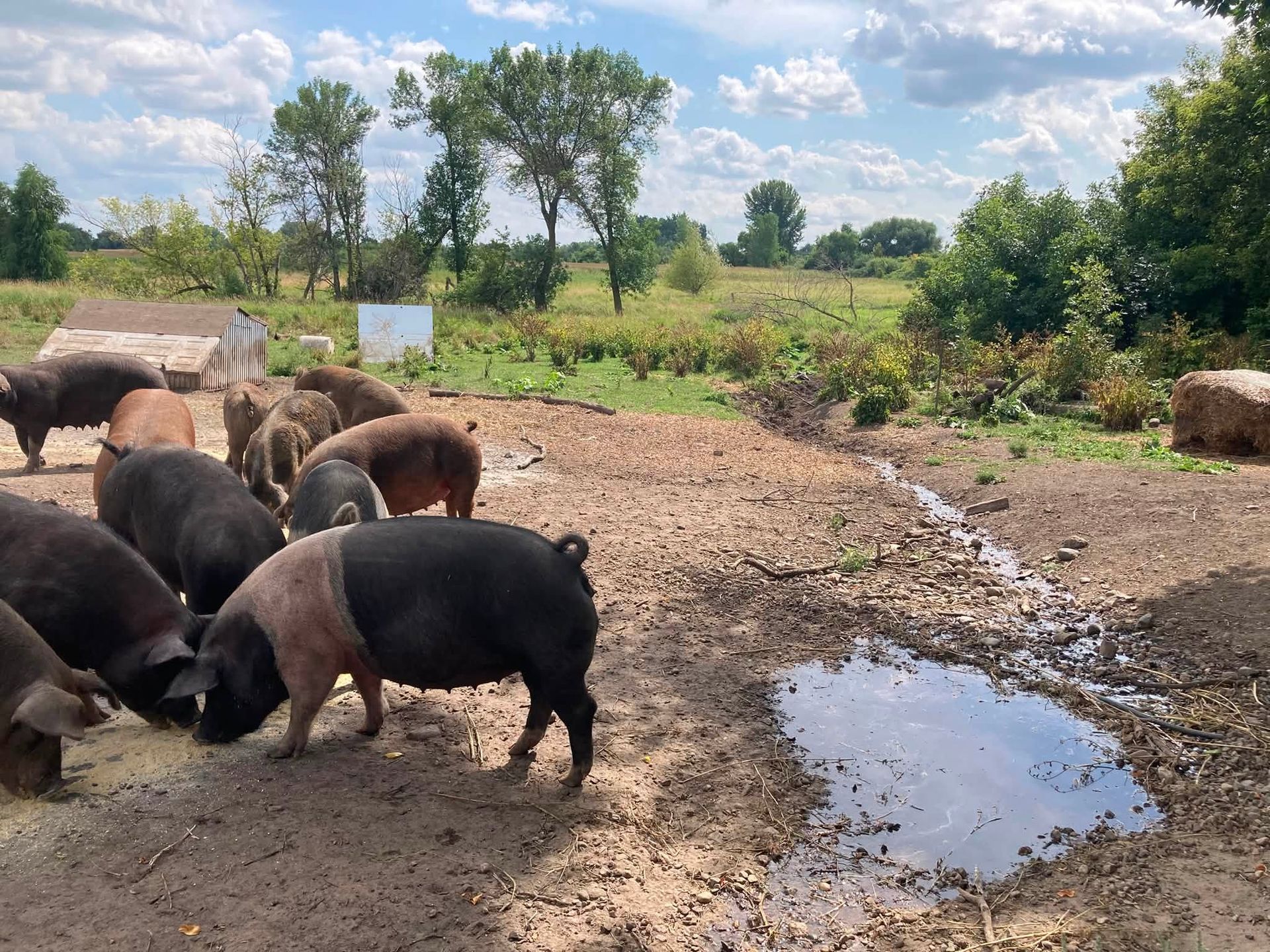
The group also discussed manure and its role in returning nutrients to the pasture and building soil health. One idea raised at the end of the day was the possibility of putting pigs on the bale-grazed hillside to further accelerate nutrient transfer.
Seeing Pasture Through a Different Lens
Back in the classroom, the group discussed what makes a healthy, productive pasture and how plants and soils respond to grazing.
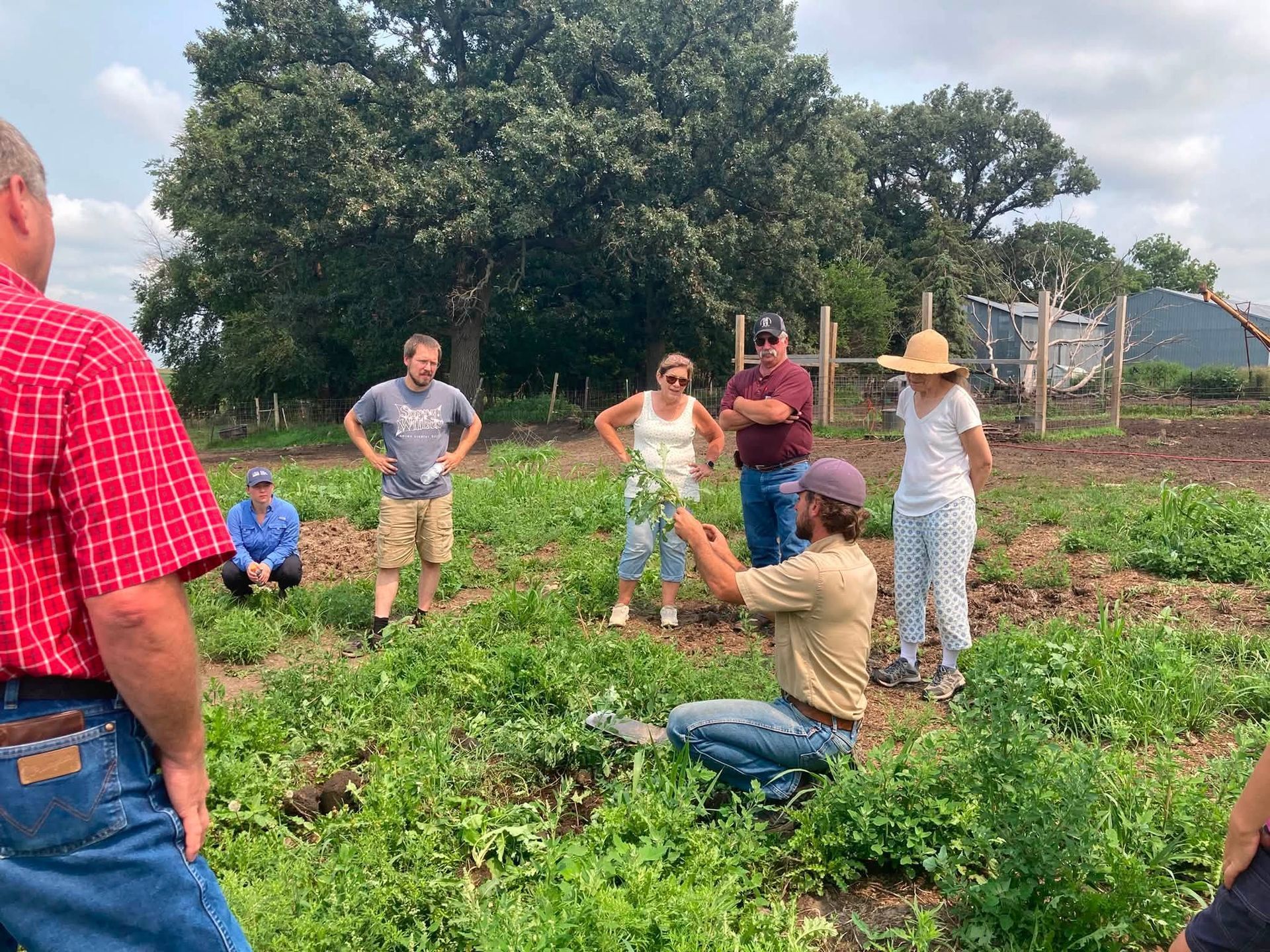
A little after 2 p.m., Jonathan demonstrated how to take a Brix reading from plants growing near the pasture. Brix measures the soluble sugars in plant sap, giving us a quick snapshot of the plant's current sugar concentration. Brix can provide another piece of information, giving producers an additional tool for observing and understanding their forage.
Throughout the day, the message remained consistent: observe, ask questions, and use what you see to make better grazing decisions.
There isn't one perfect stock density or one magic number that works for every farm. Stock density is a management tool, and its usefulness depends on the goals of the grazing system, the livestock, the plants, the soil, and the amount of time animals spend in a particular space.
Learning by Seeing
By the end of the day, participants had watched the same herd interact with several different amounts of space. They had considered forage availability, grazing behavior, plant and soil response, weed pressure, predator presence, manure, Brix, and the long-term effects of grazing management.
More importantly, they had practiced looking at a pasture and asking: What do you notice?
This type of hands-on education that can follow a producer home and change the way they look at their own pasture.
MNGLCA is proud to support opportunities that bring excellent grazing educators and producers together in the field. We are grateful to the Sustainable Farming Association, Patrick Toomey, and Jonathan Kilpatrick for sharing their knowledge and creating an engaging day of learning.
The day closed with final thoughts, ideas for putting the lessons into practice, and a look at SFA's consultation program before participants headed home.
The cattle went back to grazing. And the farmers went home with a few more questions to ask of their own pastures.

Recent Articles