
Virtual Fencing & Cover Crop Grazing Field Day Recap
A lively welcome at Blissful Bee Pastures
When guests arrived at the Virtual Fencing & Cover Crop Grazing field day on November 5, a big flock of turkeys and geese met them on the way up the driveway. Even in a quieter season, Keith and Anna Johnson's farm near Gibbon is full of life. The family raises grass-fed and grass-finished beef and lamb, along with several other enterprises.
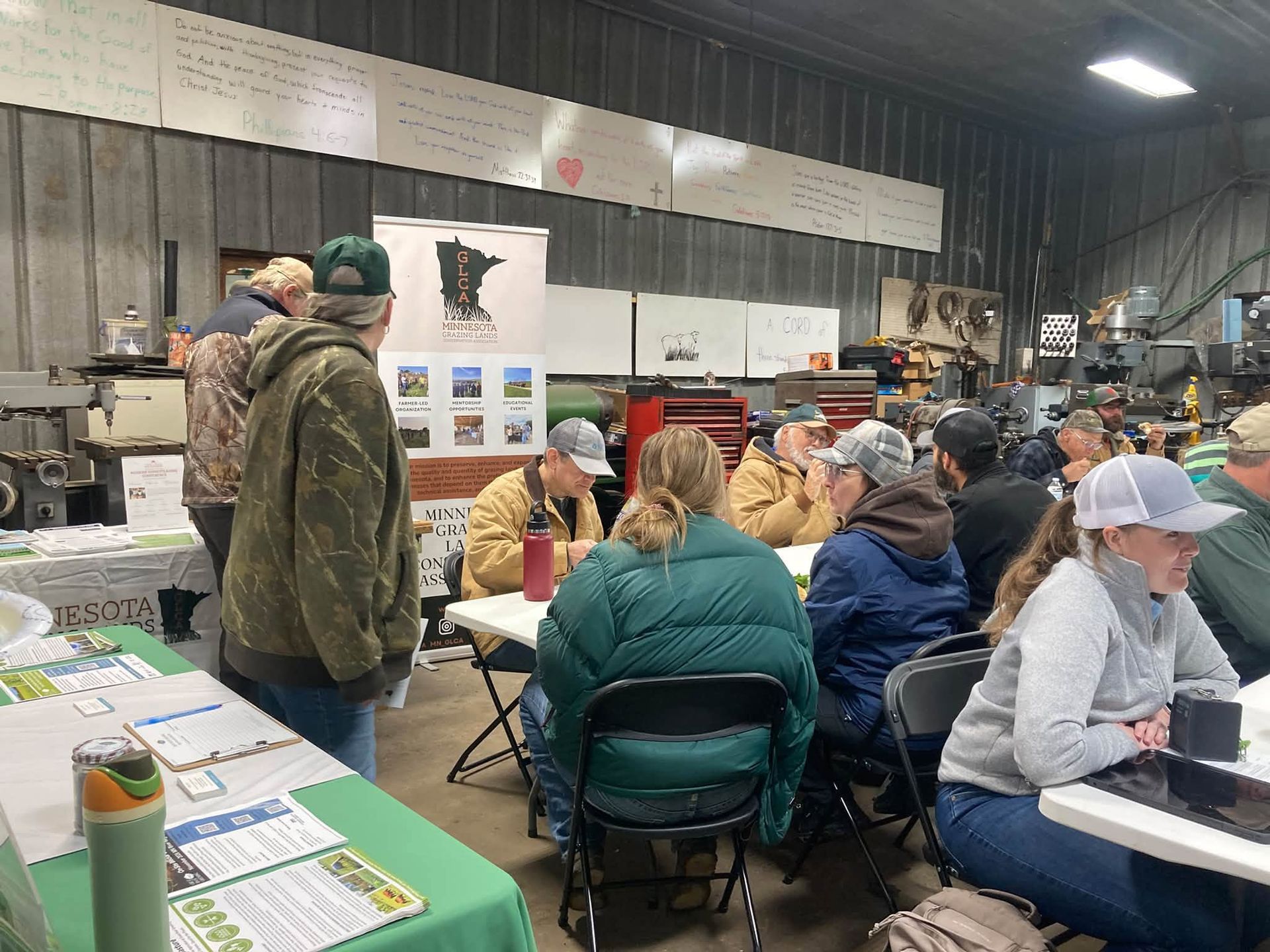
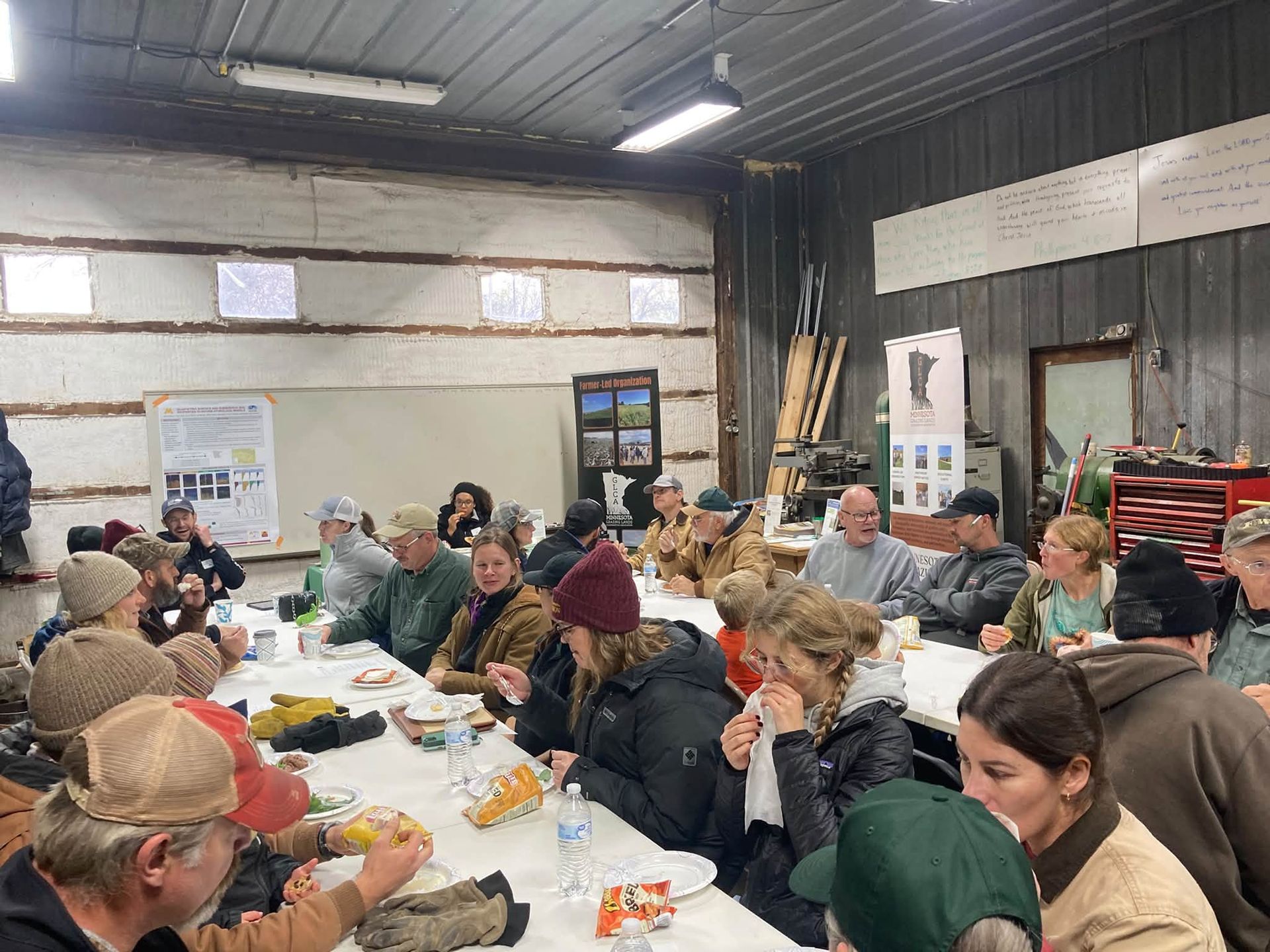
The afternoon opened with a BBQ beef lunch from local butcher Brickhouse Meats of Gaylord. It came with a side salad picked from the Johnsons' own cover crop field. "My wife likes to feed visitors cover crops," Keith joked during introductions. It set the tone for a day built on open conversation and connection directly to the land.
Hands-on with fencing, water and cost share
The first stop was the NRCS Grazing Trailer. Producers could touch and compare a range of fencing and watering options. Mae Petrehn of Ducks Unlimited and NRCS and Mariah Lewis walked through EQIP and other cost-share programs that can help pay for these practices.
Next, the group moved back inside for a Nofence demonstration with Emma Baker. Producers came ready with good questions: How long does the battery last? What is the range? How do you train cows to the collars? Emma covered those and other features of the system.
When plans change: cattle on cover crops
Benjamin and Leah Matzke of Great Heritage Farm in Winthrop shared their University of Minnesota RSDP Southwest Farmer Climate Action Fund project, Climate-Smart Grazing: Cattle on Cover Crops. The grant helped them start using Nofence collars. They wanted managed grazing without miles of new fence, after years of putting in high-tensile and woven wire.
The Matzkes were excited to grow their own cover crops. They hired Pete Kramer to no-till non-GMO soybeans. Then a tough weed flush hit. Non-GMO beans were new territory for everyone involved, and the herbicide applied, Prefix, didn't control the resistant weeds. It also carried a grazing restriction, so those acres couldn't be grazed that fall. They tilled half under and replanted, and the non-GMO acres they did harvest still yielded over 55 bushels per acre.
Their takeaways for anyone trying something similar: line up your market first, plan your weed control before you plant, and talk through a non-GMO plan early.
So they switched gears. Their cattle are now on planned grazing of cover crops at the land of local soil health advocate Pete Kramer, about 10 miles down the road. The virtual collars let them graze adaptively, and they also bring peace of mind. "While we're off the farm, we know exactly where the cows are and can watch how they move," they told the group.
Diverse cover crops and a live collar demo
Keith and Anna Johnson shared the 16-species mix behind their diverse cover crop stand, seeded at about 72 lbs per acre.
| Cultivar | Plant | lbs/acre | Total lbs |
|---|---|---|---|
| Buckshot | Brassica mix | 2 | 66 |
| BrassicaMax CC4 | Brassica | 1.2 | 39.6 |
| VNS | Berseem clover | 1.05 | 34.65 |
| VNS | Hairy vetch | 3 | 99 |
| 4010 | Peas | 7.5 | 247.5 |
| Austrian | Winter peas | 9.1 | 300.3 |
| VNS | Lentils | 1.54 | 50.82 |
| Cosaque | Black oats | 10.56 | 348.48 |
| Jerry | Oats | 9.12 | 300.96 |
| VNS | Winter rye | 10.6 | 349.8 |
| VNS | Annual ryegrass | 7.5 | 247.5 |
| VNS | Japanese millet | 1.54 | 50.82 |
| VNS | Proso millet | 1.5 | 49.5 |
| Clemson Spineless | Okra | 0.81 | 26.73 |
| VNS | Buckwheat | 4.6 | 151.8 |
| Peredovik | Sunflowers | 0.63 | 20.79 |
Several heavy rains kept the group from walking out to the muddy field. Instead, plants had been picked ahead of time and passed around the room so everyone could see and handle them.
Then everyone headed outside to watch Anna move a flock of sheep and a group of heifers wearing virtual collars. It was a chance to see the system at work on real animals.
New research: how management moves water through soil
The day closed with brand-new, preliminary research from the University of Minnesota. Alice Dambroz and her team are studying how farm management affects how water soaks into and is stored in soil across the High Island Creek watershed near Henderson (about 241 square miles). The creek swung from flood stage at 11.6 feet in June 2024 to about 3.4 feet in September 2025 and 2026. That makes soil water storage a real question for the region.
The team poured blue dye equal to about 2 inches (50 mm) of rain on test plots, waited 24 hours, then dug pits to see where the water went. They tested 7 sites over two seasons, comparing conventional cropland, soil health cropland, grazed land and prairie.
| Measure | Conventional | Soil health | Grazing | Prairie |
|---|---|---|---|---|
| Flow pathways below 30 cm, summer (avg per 10 cm) | 2 | 10 | 4 | 5 |
| Flow pathways below 30 cm, fall (avg per 10 cm) | 7 | 20 | 7 | 5 |
| Penetrometer resistance, summer (PSI) | 168 | 83 | 164 | 66 |
| Penetrometer resistance, fall (PSI) | 156 | 183 | 218 | 112 |
A few takeaways for graziers:
- In fall, water pathways in grazed ground reached 138 cm (about 4.5 feet), the deepest of any site. Soil health sites reached 127 cm.
- Soil health sites had the most flow pathways in both seasons, and grazed sites matched or beat conventional fields. More pathways mean more routes for rain to soak in instead of running off.
- Grazed sites showed higher soil resistance, especially in fall, a reminder that managing compaction matters.
- Surface roughness, which slows runoff, trended up from conventional to soil health to grazing. Prairie was the only system that was significantly different.
The data will feed watershed models that link soil health practices to real changes in water storage and streamflow, to support watershed planning.
It was a great day of learning, questions and good conversation. Thank you to Keith and Anna Johnson for hosting, to our speakers, and to event partners Great River Greening, Green Lands Blue Waters, and the U of M RSDP Farmer Climate Action Fund.